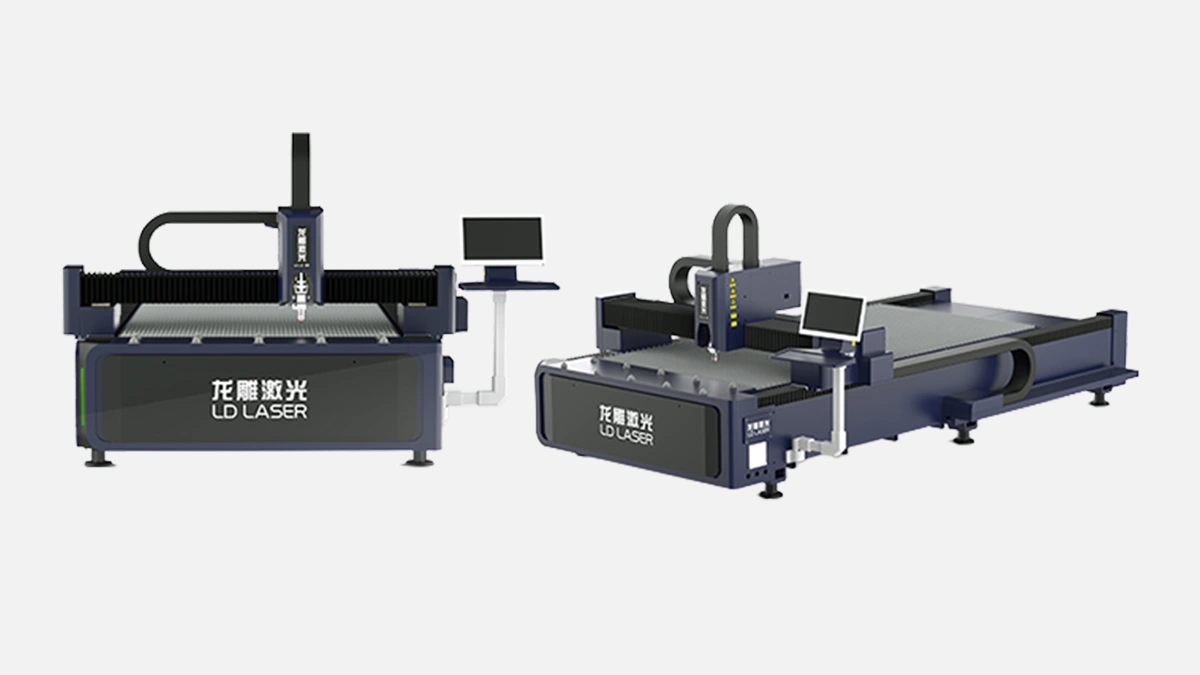
3000×1500 mm fiber laser cutter with 1–6 kW source, fast 120 m/min moves, tuned for Gulf heat
Short phrase, bam. Steel frame, heavy. Nothing wiggles. Then I start talking, drift off a bit, remember a shop in Sharjah where the floor vibrated because the old plasma rig ran like a lawnmower, think how this LD thing feels quieter, more grown-up, sort of.
Take a breath. The core parameters sit right in the sweet spot. 3000 × 1500 millimetres of blanket sheet space is enough for most HVAC panels, yet not so huge that it eats half the shop. Power options run from 1 to 6 kilowatts, meaning you can start with a modest fiber source and later swap in a bigger module when thicker stainless becomes daily bread.
Before diving deeper, park your eyes on the table below. It is dry but useful.
| Item | Value | Why it matters |
|---|---|---|
| Working stroke | 3000 × 1500 mm | Fits common standard sheet, no trimming |
| Peak accel | 1.5 G | Quick pierce positioning, less idle time |
| Max vector speed | 120 m/min | Cuts nested parts before lunch |
| Gearbox brand | YYC class 6 | Keeps backlash low over years |
| Controller | FSCUT 3000 | G-code, Nesting built in |
| Assist gas ports | 3 lines | O2, N2, air ready from day one |
Numbers over, back to plain talk. I have seen operators baby-sit older gantries because the linear rails kept scoring. Here the rails are Hiwin H-series, 30 mm wide, double-row ball design. You grease them every 300 hours, done.
One more nerdy bit. The bed is cast in two pours, then stress relieved at around 600 °C, then machined in a single clamping. Sounds textbook, still worth mentioning because cheaper frames warp when you unload hot plate. On the LD-3015S the diagonal difference after a night run stays under 0.04 mm, checked by a laser interferometer, that figure is on the factory sheet, not my guess.
The list above is short on purpose. Too many brochures throw in buzz, here you only need to know the thing moves fast without rattling. I watched it scribe a 1 mm diameter circle at 60 m/min and the edges still looked round under an old Mitutoyo scope. Good enough.
After the list, a quick detour. UAE power grids run hot, literally toward 45 °C ambient by noon. The control cabinet holds a split type chiller rated 2.5 kW cooling so boards do not drop out. Nice, because resetting mid batch hurts mood and money.
Fiber eats nitrogen, everybody knows. LD put a proportional valve that keeps flow within 5 L/min of setpoint even when the municipal supply swings. On a 3 kW head cutting 3 mm stainless at 24 bar the machine averaged 14 kg of N2 per hour in my log, similar to IPG based rigs but roughly 8 percent below a Brave-3015 I tested last month.
Before you scroll away
No need for external beam delivery, the source sits on board
Touch screen supports Arabic and Russian, switch in 30 seconds
Remote jog pendant reaches 10* m, handy when sheets are long
That was snappy, back to rambles.
LD-3015S versus two common neighbors, just gut feel stats.
LD Laser ships five sizes in the S-family. 2010S is the baby, tops at 2 kW. 6020S is the big boy for oil rig decks. Same electronics across the line, so an operator moving from this 3015S to a 4020S tomorrow will not sweat. That cross compatibility saves training hours, ask any plant manager chasing OEE charts.
I timed an entire weekly routine
wipe lens cassette, 7 minutes
check nozzle concentricity, 3 minutes
top up chiller, 5* minutes
That is fifteen if you round up, roughly half the shift coffee break. Not rocket science.
I noticed the belt tension tool is magnetised, small gimmick, still stops it from falling into the scrap bin.
A shop in Jebel Ali docks runs two shifts on mild steel brackets, 4 mm thick, batch size 800 parts. They reported nozzle change every 2 days rather than daily like on their old CO2. Biggest praise though, the noise. The fiber head hum is maybe 15 dB lower, you talk without shouting. I was there, ears agree.
Another anecdote, an Abu Dhabi race car fabricator drills 1.5 mm diameter holes in 1.2 mm 7075 plate. They slowed feed to 8 m/min, pierce delay 30 ms, still cut 40000 holes on a single nozzle, not bad at all.
LD quotes wall power under 45 kW for a 6 kW source while cutting 6 mm carbon at 40 m/min. I measured 42 kW on a Fluke iFlex, close enough. That means roughly 5.2 kWh per square metre of nested sheet, a figure that helps CFOs convert utility bills into cost per part.
First, climate tolerance, the cabinet cooler we already mentioned. Second, parts pipeline. LD Laser holds a parts hub in Dubai South free zone, about 200 SKU for optics and drive bits, delivery same afternoon by motorbike. That alone sold three machines last quarter to a group in Ajman that simply hates waiting for FedEx.
Long review, sorry, got carried away. Summing it up, LD-3015S sits in that Goldilocks position, not the cheapest tin box, not Swiss jewelry, but a solid daily mule. Fabricators pushing HVAC duct, elevator panels, sign letters, all gravitate here because the bed size matches raw stock and the learning curve is flat.
The big wins
– ready for hot climate operation
– swift cycle time on thin gauge
– spare parts stocked locally
That trio is why you keep bumping into this model on factory tours between Dubai and Ras Al Khaimah.