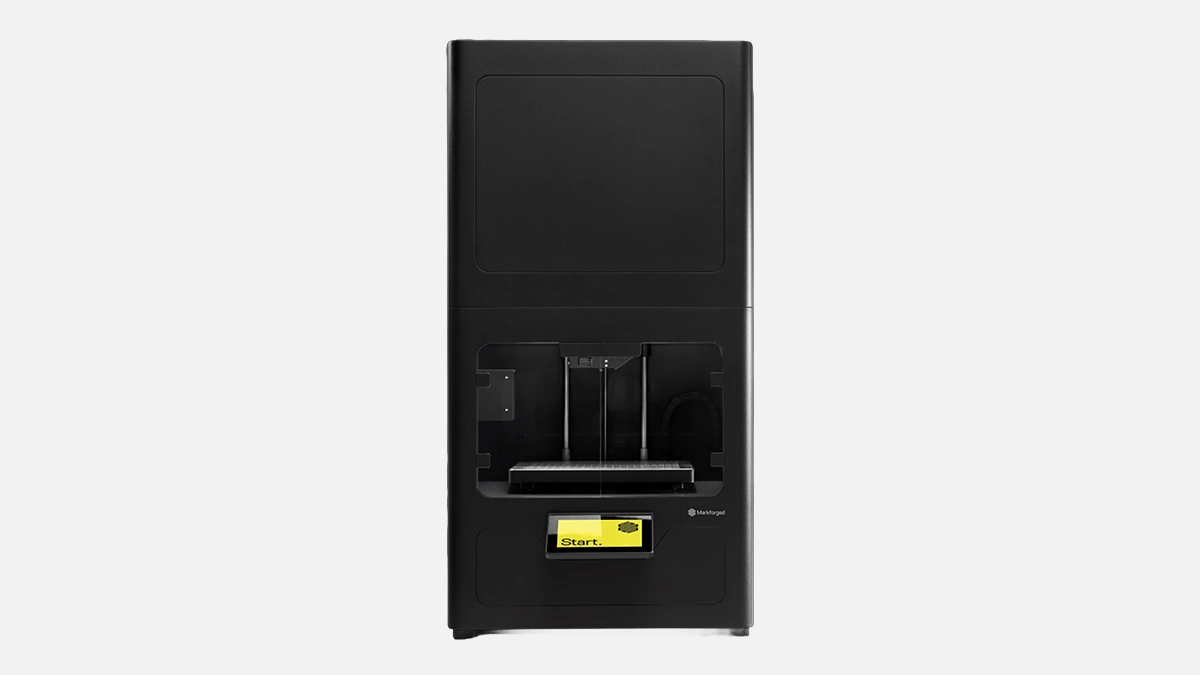
Bound metal 3D printer with 300×220×180 mm volume, perfect for UAE low-volume steel and copper parts.
Short intro first, no warm up. Metal X prints metal, obviously. Feels almost magical, yet it is just grounded engineering from a Boston-based company that has been on the market for 10 years, shipping roughly 13 000 composite and metal machines worldwide. Now, for shops in Dubai or Sharjah, the question is simple, will it run day after day in 45 °C summer heat, will parts come out inside tolerances, and can the operators keep up without babysitting the thing.
The printer chassis is aluminum plus polymer skins, nothing fancy, but rigid enough. Gantry rides on linear guides, belts handle X/Y, Z is a lead screw stack. The extruder spits out filament that is basically powdered steel held together by two binders, smells like crayons when warm, so keep ventilation on.
Before we drown in details, park your eyes on the numbers down below, they answer the What-is-inside faster than any paragraph could.
| Sub-assembly | Key part | Comment |
|---|---|---|
| Print head | Dual drive gears | keeps filament grip when copper gets slippery |
| Build plate | PEI-coated tool steel | magnets, no clips, swap in 15 seconds |
| Enclosure | Acrylic doors | keeps curious fingers out |
| Electronics | 32-bit MCU | silent steppers, basic but solid |
That table is small, purposefully, enough to orient you, not enough to bore.
Heat, dust, weekend schedules, that is the triad. Metal X does not mind dust much, fans are filtered and there is no laser optics to fog up. The real trick is the wash-1 and sinter-2 stations that complete the trio, they can sit in another room with AC and leave the printer on the shop floor. Many Emirates operators run a split workflow: print parts through the night, wash at 07:00, sinter batch at 14:00, deliver at 20:00 to an oil-field client. Time zones work in your favor.
Now let me break flow. Somebody on a forum asked, Does the bound metal route beat a powder bed machine on cost per part. The blunt answer, for low volume yes, for 500+ pieces probably not. You pay with slightly larger shrink margins and a bit of hand deburring.
Lists are boring, right, yet every operator I met prints them and tapes to the wall. So here they live mid article.
We already threw numbers around, here is the narrative. A build volume of 300 by 220 by 180 mm matches the bulk of maintenance brackets, valve housings and small impellers used in regional petrochemical plants. Layer heights down to 50 µm look pretty on copper heat exchangers, the rougher 125 µm is fine for jig inserts, especially when you are just chasing function.
The machine pulls 2 A from a regular wall socket, no industrial three-phase wiring, a win for rented facilities around Jebel Ali. Weight, a mere 75 kg, two techs can lift it on a bench, although Markforged insists on using a pallet jack, your back your choice.
Think three steps, print, wash, sinter. During the wash the primary binder dissolves in alcohol. Takes 4–24 hours depending on geometry. Then the furnace ramps to 1280 °C under argon, eats the remaining binder, fuses metal grains. Shrinkage tables are built into Eiger, you see green, brown, and final dimensions onscreen. Green part feels like wet chalk, handle gentle. Brown part is crumbly, hold with both hands. Final part rings like any wrought counterpart.
Bullet list again, sorry not sorry, gives heads some breathing room.
Competitors? Desktop Metal Studio System 2 and BASF Ultrafuse rigs come to mind. Studio’s build plate is smaller at 300 × 200 × 200 mm, yet the furnace is slightly bigger. BASF route needs an open-source FFF printer plus external debind service, throughput slows. Metal X lands in the middle: integrated, but not locked into proprietary gas mixes. If you need lattice-heavy aerospace brackets, a laser powder bed unit like EOS M 290 beats it on resolution but costs 8× and eats 20 kW during peak. Hence many Gulf workshops buy Metal X as a feeder for prototyping and hold off big capex until volumes justify.
Markforged rolled out Metal X Gen 1 in 2017, tweaked cooling in Gen 1.1 a year later, and shipped the current Gen 2 boards in 2021. Firmware updates drop quarterly. Older frames accept new extruders, so a 2018 machine still earns its keep.
Stainless 17-4PH is the everyday hero, good corrosion and strength. H13 and D2 cover hot and cold tooling, copper sells well in Abu Dhabi heat sink shops, Inconel 625 for sour service manifolds. Markforged adds one new alloy roughly every 12 months, latest rumor is titanium for medical fixtures.
Filament is packaged in 200 cc spools. Price we skip, rule of the brief, but know that cost per cubic centimeter sits between SLM powder and traditional machining when batches are sub 200 parts. Electricity negligible, argon consumption roughly 0.15 m³ per cycle, check supplier contracts around Ruwais.
Users in Al Ain stick parts straight into a tumbler with ceramic media, 45 minutes and you are client ready. Machinists still tap holes, tolerance on threads lands within H6 after one cleaning pass. In rare cases you need HIP, send it to Med-Tech Musaffah, they run 100 MPa presses nightly.
The PTFE guide tube chars if nozzle heater overshoots, happened twice in our circle. Spare is cheap. Firmware update 1.11.5 fixed the PID table. Motion belts stretch after 800 hours, tension wrench solves. That is about it.
Oilfield service, aviation MRO, university labs. Each chases a different gain. Service shops love the rapid geometry tweaks, MRO centers skip overseas stocking, labs explore lattice research without standing next to lasers. In UAE context, small footprint and single phase draw trump everything, many sites just do not have free breakers.
You can wait for the perfect spec sheet or you can drop a Metal X next to your old CNC and run overnight. Most teams choose the latter, they show management a finished stainless adapter the next morning and debate ends.
Those points sum it, you either need that or you do not.
Last line, promise. Metal X covers the gap between composite printers and seven-figure powder beds, giving Gulf manufacturers metal capability without heavy infrastructure.