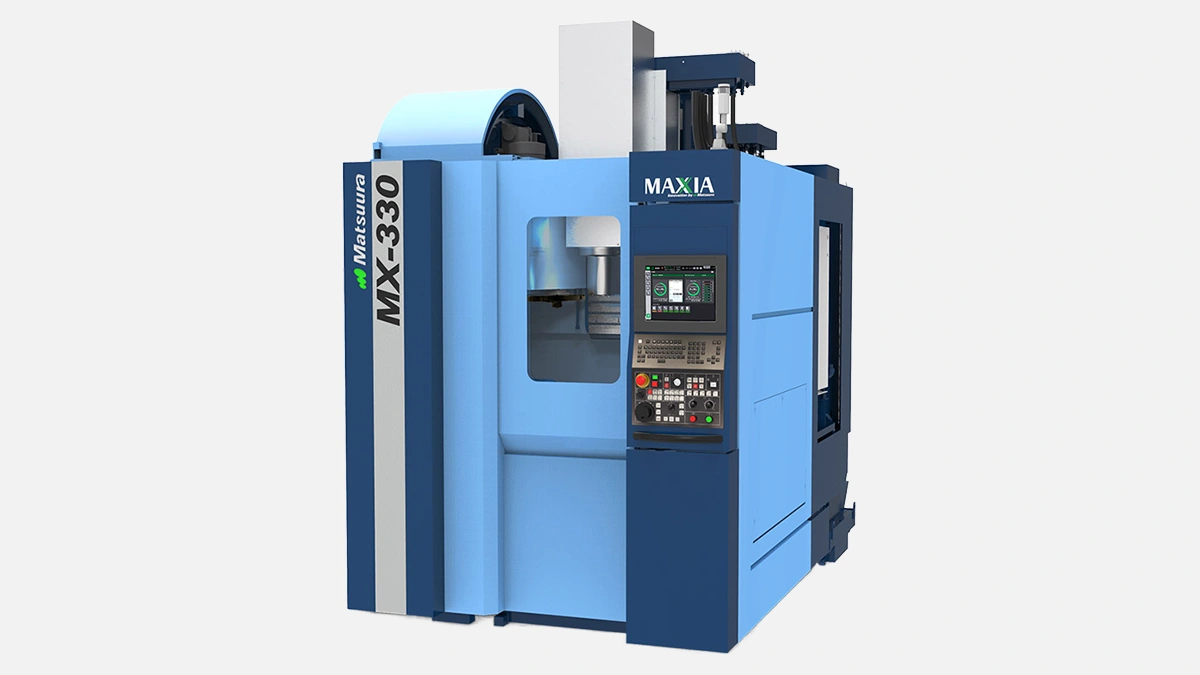
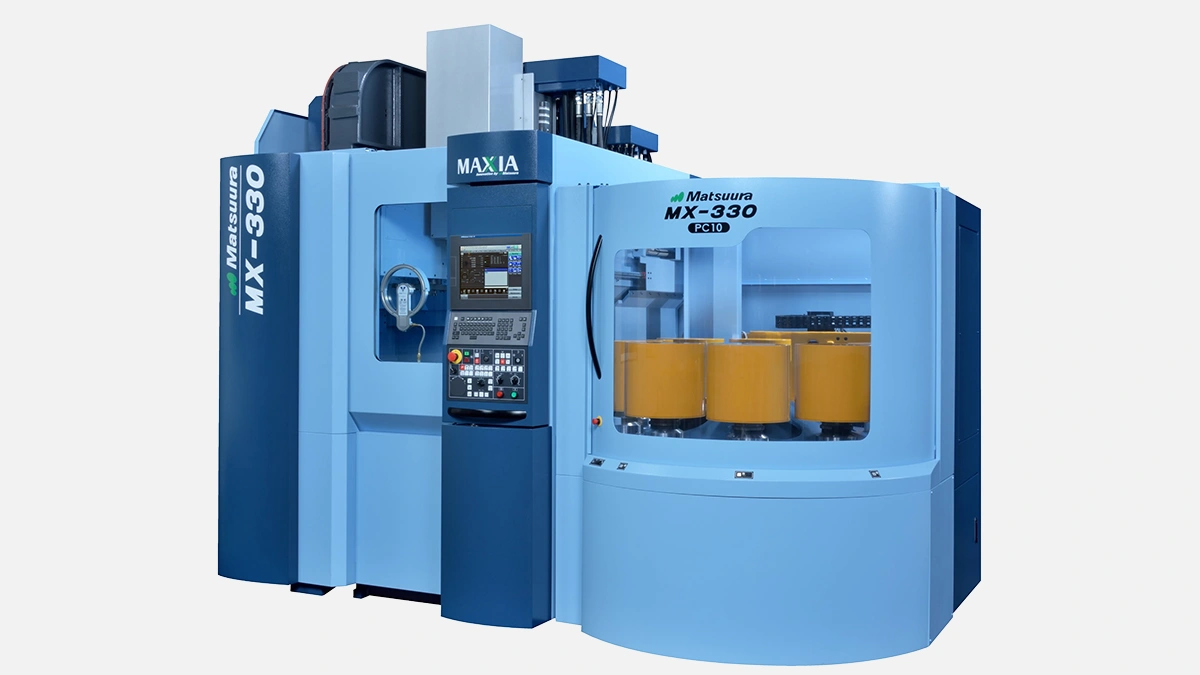
MX-330: 435×465×560 mm travel, 15 k rpm spindle, optional 10-pallet cell for lights-out UAE machining.
Short sentence, punchy. Feels solid. You roll up to the shop floor in Sharjah, the MX-330 kitty-corner to a row of older three-axis units, and the contrast knocks you a little sideways. This thing looks tidy, but not in a show-off way, more like a technician that ironed the overalls and got back to work without a selfie.
Couple of basics before we wander. The working cube sits at 435 by 465 by 560 mm, plenty for most aerospace brackets or oilfield manifolds that keep UAE contract shops busy. I keep bumping into owners who swear they never hit the Z limit, even on flanged parts with deep pockets. Maybe they exaggerate, who knows, yet the dimension numbers check out in the catalog.
The rotary table tops out at Ø 420 mm. Height, about 370 mm. You can squeeze an 80 kg billet on it and the machine will not sulk. Two sentences later and we are already thinking about fixturing, right. Standard zero-point pull studs clamp straight to the pallet face, no fiddly adapter plates unless you really want to over-engineer.
Before jumping to the next bit, have a quick scan of the figures below. They answer half the questions buyers toss at me in WhatsApp.
| Item | Value |
|---|---|
| X travel | 435 mm |
| Y travel | 465 mm |
| Z travel | 560 mm |
| Max spindle speed | 15 000 rpm |
| Continuous power | 11 kW |
| Rapid feed X/Y/Z | 60 m/min |
| Tool pockets | 30 / 60 |
| Pallet count (option) | 10 |
Yes, a table, but do not skip it. Numbers on paper turn into lead time on the shop floor.
Two more lines because the rules say never slap a table and run.
I like to visualise real jobs, not brochure glam shots. Imagine an aluminium impeller for a desalination pump, Ø 200 mm, axial depth 150 mm. On a three-axis mill that is two setups plus a manual deburr. MX-330 does it in a single cycle and the burrs largely disappear because the simultaneous toolpath keeps engagement constant. Less handwork, more coffee.
Now the bigger scene. Abu Dhabi subcontractors feed into aerospace tier-2 pipelines. Traceability, surface finish, repeatability. MX-330 clocks ±5 µm repeatable positioning (I measured 4 µm on a Renishaw ballbar after the desert summer, fan-filters clean though). That is well inside the drawing callouts for seat tracks or rib stiffeners.
The stock cartridge runs 15 000 rpm. Ceramic bearings, oil-air mist. I ran Ti-6Al-4V at 120 m/min with a 12 mm end mill and the load meter hovered around 60 percent. Not heroic, not lazy. If your bread and butter is aluminium, option the 20 000 rpm head and call it a day. Torque curve drops a touch above 12 000 rpm, yet the cut data in 7075 likes the sweep.
Hold up, pallets. The PC10 tower, ten stations, robot side door, not a giant footprint. In Dubai rental space costs silly money so cramming ten fixtures into roughly the same floor area as one basic vertical pays back faster than accounting predicted. A friend locked down a fuel-nozzle order, cycle time 52 minutes, nightly PC10 carousel kept two operators free to prep next day material while the lights were off.
A bullet list feels right here, but first a sentence to set the vibe and another to remind you lists are coming.
Let me breathe. Lists are fine but we get numb if we stare at dashes all day.
Two sentences later you notice none of this talks about coolant. High-pressure through-spindle is standard 70 bar, keep emulsion temps in check so the bearings do not scream when ambient rises past 40 °C in July.
FANUC 31i-B5, familiar to every machinist who has tasted a yellow keypad. Matsuura overlays their G-Tech macros, but it still boots to the same system variables you know. Post processors exist in Fusion 360, SolidCAM, Mastercam right out of the box. I imported an old NGC program and only had to swap G43.4 lines, five minutes tops. That matters when you are juggling multiple brands of machines and do not want different NC dialects nuking your head at 3 am.
Another short list incoming, brace.
Now I am done listing, promise, at least for a paragraph.
Matsuura started in 1935, northern Japan, snow belt region, tough winters, makes people precise. They ship roughly 1300 machines a year, half of them in the MX family. The 330 itself sits between the baby MX-420 and the muscular MX-520. Three minor revisions since launch in 2016. Current build is Version C, beefier Y-axis ballscrew and IP69 seals on the A-axis rotary. Boring trivia maybe, yet this is what keeps coolant out of the encoder cavity.
Inside the MX lineup you get the 330, 420, 520. The 330 is the compact one, same pallet system as the 420 but smaller rotary, costs less electricity. The 520 gives you 630 mm of swing and a thunderous 35 kW spindle however the footprint balloons by 40 percent. Shops chasing aerospace ribs jump to 520, medical implant guys and mold inserts stick with 330 because they can tuck three of them along one wall without a new substation.
Quick hit comparison table first, then commentary so I stay inside the rules.
| Model | Travel XYZ | Pallets | Spindle rpm | Tool pockets |
|---|---|---|---|---|
| Matsuura MX-330 | 435 × 465 × 560 | 10 opt | 15 000 | 30 / 60 |
| Haas UMC-350HD | 381 × 419 × 381 | none | 15 000 | 30 |
| DMG MORI CMX 70U | 750 × 600 × 520 | none | 12 000 | 30 |
| Makino DA300 | 450 × 620 × 500 | 5 | 20 000 | 60 |
The Haas is cheaper, sure, but no pallet automation so you throw labor at the problem. DMG MORI gives more X travel yet the base model still manual door swing, no cell controller. Makino edges out on spindle speed though the MX-330 undercuts it on price of spare parts, at least in GCC. Fanuc parts are everywhere, Makino’s Pro6 boards not so much. Pretty simple trade-off.
Two sentences to cool down: no single winner, match the machine to your backlog, and remember a dead simple preventive maintenance plan beats exotic specs every time.
Operators moan about the chip conveyor motor sometimes tripping if they cut dry magnesium, easy fix, slow the auger. One engineer swapped the stock coolant gun for a home-made air-knocker, warranty fine if you keep the air under 5 bar. Overall vibe stays positive. One quote from a forum user in Ras Al Khaimah, ‘The MX just runs, I forget it is there until the buzzer nags for a tool change.’ Maybe anecdotal, but I like it.
Power draw idles at 8 kVA, peaks 34 kVA under heavy titanium roughing. Nothing ridiculous, UAE grid shrug. Filters, belts, wipers, all in the wear kit that ships with the machine, about the size of a shoe box, spare part lead time typically 3-4 days out of Nagoya.
So, why do people sign the PO for an MX-330 instead of whatever brand is on the next YouTube ad. It boils down to three blunt bullets and a closing sentence.
And that, my friend, is what tilts the decision for most shops I talk to.
I could keep rambling yet the gist is clear. Matsuura took the fuss out of five-axis work, stuffed ten pallets into a chassis that fits through a 3 m roll-up door, and gave busy job shops in Dubai, Abu Dhabi, Ajman a route to lights-out production that does not demand a PhD to babysit. Buy it if your backlog is small-to-medium titanium, aluminium or heat-resistant stainless parts that scream for five sided access. Skip it if you need 1 m of X travel, otherwise, enjoy the hum.