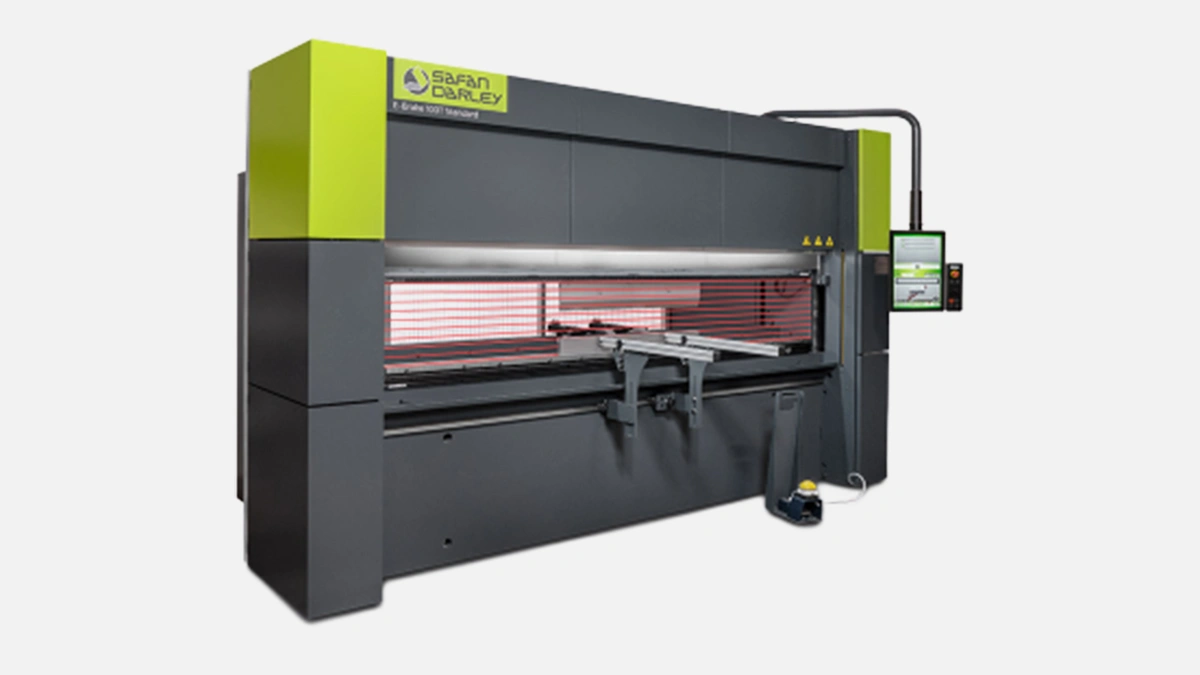
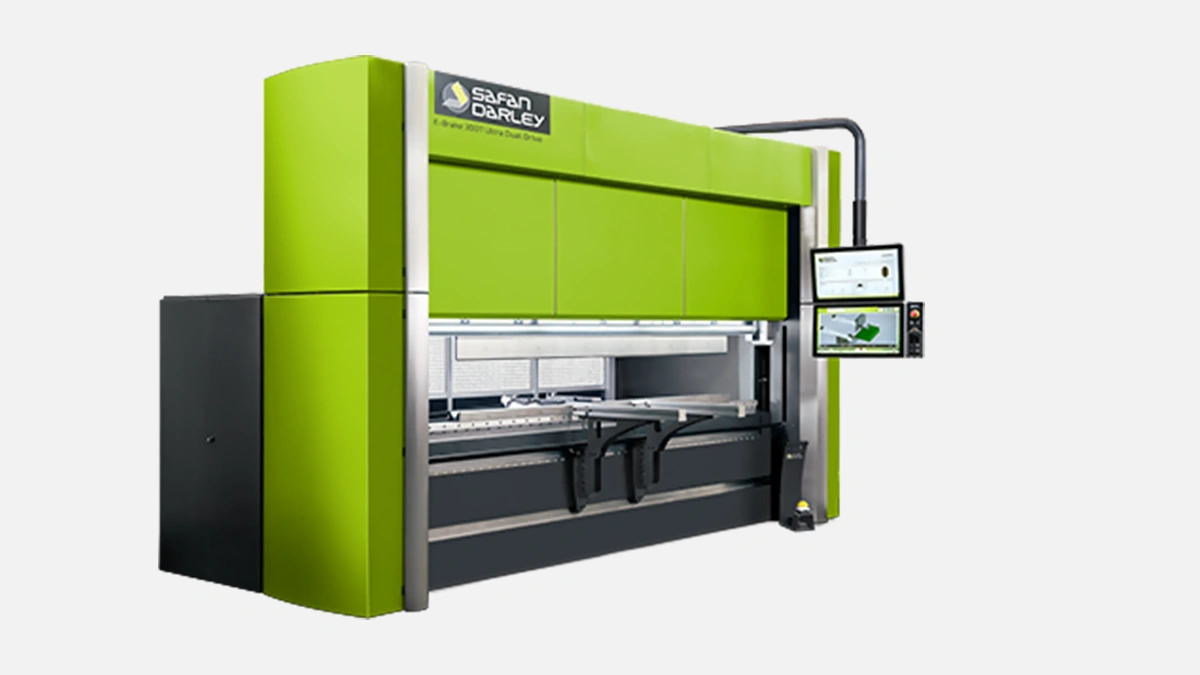
Servo-driven press brake, 300-ton punch, 4.1 m bed, zero hydraulic oil
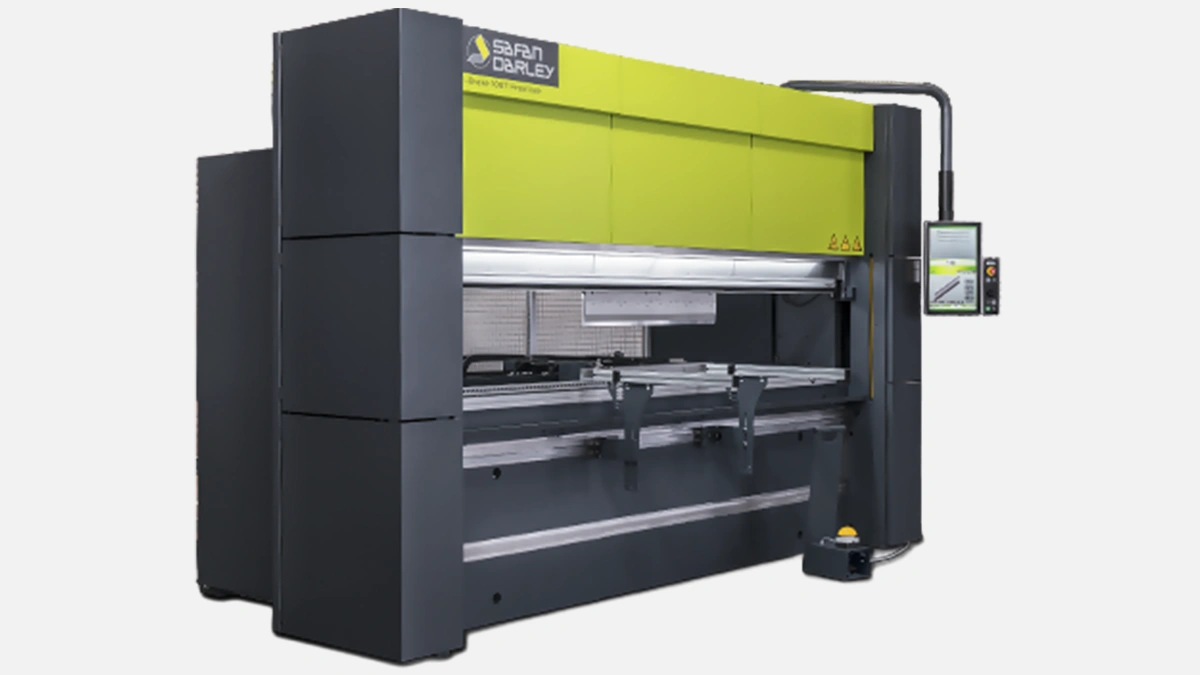
A 300-ton press brake that skips hydraulics, grabs two hefty servo drives instead, and, weirdly, stays quiet. One minute you stare at the lime-green SafanDarley skin, next moment you realise the ram already kissed the sheet, no oily hiss, no hot smell. Odd sensation, like the first time you sat in an electric car and wondered where the engine note went.
Now longer, messy sentence ahead, buckle up, because the full story about how a Dutch builder that has been on the market since 1960 decided to hammer out roughly 5 000 servo-driven brakes a year, tweaking each generation bit by bit, yet keeping the same rough naming, is tangled, peppered with user tweaks from job shops in Rotterdam, automotive Tier-2 plants in Slovakia, and, yes, small fabrication islands dotted across Abu Dhabi free zones that crave compact footprint and lower peak loads on their generators.
SafanDarley welds the C-frame from fine-grain steel, stresses it twice, then slaps on a varnish that smells like wet grass when you uncrate the thing. That smell, by the way, leaves after a week. Under the hood you see twin ball screws riding on oversized linear guides. No pumps, no valves, just two synchronized servos talking through EtherCAT. A tech from Dubai told me the diagnostic trace looks almost boring, hardly any pressure spikes, less chatter for the maintenance log.
The table below captures the dry numbers users keep Googling at 2 am when an RFQ pops up and the old hydraulic brake feels too slow.
| Parameter | Value | Why it matters |
|---|---|---|
| Press force | 3000 kN | Lets you form 8 mm stainless across the full 4.1 m bed |
| Stroke | 300 mm | Enough room to flip a Z-profile without dog-ear marks |
| Open height | 615 mm | Welcomes tall box tools that HVAC guys love |
| Approach speed | 220 mm/s | Cuts idle time on long batch runs |
| Return speed | 220 mm/s | Same both ways, keeps cycle predictable |
| Power use | 45 kW peak | No stand-by draw between hits |
Notice how the peak draw only lasts a few seconds, after that the drives sip maybe 4–6 kW while waiting for the next sheet. On diesel generator backed shops outside Sharjah, that drop means one less genset whirring all night.
Why two motors, not one massive lump? Quick bullets before the brain drifts:
And, yeah, the noise. Operators I met in Ras Al Khaimah claim they can hold a call next to the machine, only faint whirring. Not scientific, but convincing.
Heat, dust, ambitious lead times. Everyone repeats the same three demands: consistent angle, minimal oil mess, remote diagnostics that do not require a VPN circus. E-Brake tics those boxes. The sealed ball screws barely sip grease, nothing leaks on the floor, which keeps municipal inspectors calm. Angle consistency rides on the E-numerical control plus a laser based real-time bend sensor nicknamed EASY-Angle. Does it drift? A technician I trust measured ±0.25° variance across a 3 000 hit test, running 4 mm mild steel at 32 °C shop temperature. Good enough for architectural metal jobs.
Another list, because my mind jumps:
Most brochures spit numbers, few tell where they bite. That 615 mm open height means your press brake can swallow deep box tooling, letting HVAC duct fabricators bend both flanges in one go. The 300 mm stroke stands above the usual 265 mm found on classic 250 ton hydraulics like the Amada HFE series. More stroke equals less tool swap gymnastics.
Approach and return speeds at 220 mm/s look modest next to tiny electric brakes screaming past 350 mm/s, yet remember the mass of a 4.1 m ram. Safety rules in UAE cap max free fall, so being too fast only triggers more laser fence interruptions. Real world cycle times, according to a customer in Jebel Ali, improved 18 % after swapping a hydraulic LVD PPEB-3020 for this E-Brake 300T, mostly because dwell time and decompression vanished.
I promised a no-nonsense comparison. Fine, pick three current rivals, throw them on the bench.
| Model | Force | Drive | Stroke | Power idle |
|---|---|---|---|---|
| SafanDarley E-Brake 300T | 300 T | Dual servo | 300 mm | 0 kW |
| Amada EG-4010 | 100 T | Single servo | 180 mm | 2 kW |
| Trumpf TruBend 5320 | 320 T | Hydraulic | 265 mm | 9 kW |
| Durma AD-SR 30175 | 175 T | Hybrid | 260 mm | 5 kW |
Numbers say enough. The Dutch machine sits close to Trumpf in force, beats it on idle draw, and offers broader stroke than the Turkish hybrid. Amada is speedy but cannot tackle thick plate jobs past 3 mm at full length.
SafanDarley sells six E-Brake tonnages: 100, 160, 200, 250, 300, 400. The Ultra Dual Drive tag appears only on 300 and 400. If you mostly form light gauge shelves, the 160 saves floor space, yet loses the fancy dual drive and drops stroke to 255 mm. The 400 brings 3600 mm inside throat, yet bumps power peak to 65 kW. Many UAE fab shops pick the 300 sweet spot because it covers both architectural panels and occasional 10 mm base plates without revamping power feeds.
Time to wrap, brain fog rolling in. SafanDarley built a press brake that feels more laptop than forklift, yet keeps raw push to crack 8 mm stainless. Peak draw is brief, oil spills are zero, accuracy stays inside a quarter degree until the sun slides behind the dunes. Not perfect, spare parts still ship from the Netherlands, and the multi-touch panel sometimes freezes after Windows updates, but the core drive train just works.
Companies in Abu Dhabi that weld decorative facades grab it for clean floors, offshore skid builders like the fast cycle, and each accountant enjoys the drop in standby energy bills. So, yeah, E-Brake 300T Ultra Dual Drive makes sense, maybe not for every backyard garage, definitely for any plant that juggles gauge ranges and hates hydraulic leaks.