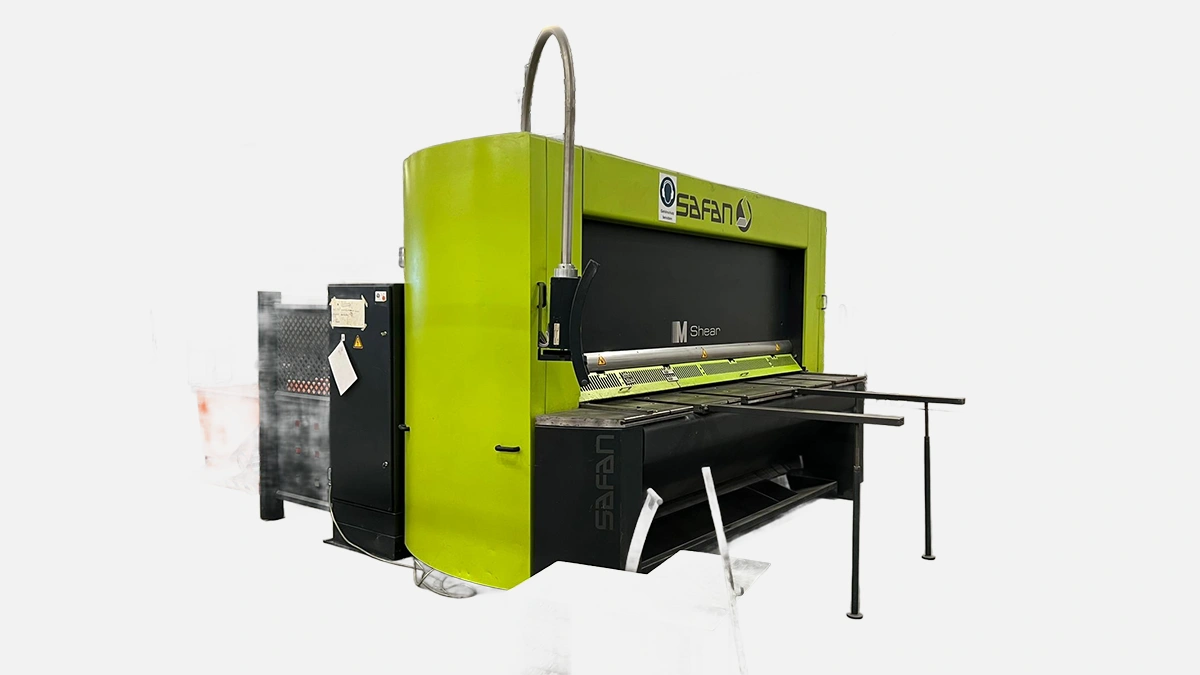
SafanDarley M-Shear cuts 6 mm mild steel at 3100 mm length with fast servo backgauge.
Short line first. Blade meets sheet. Sparks? Not here, only a crisp cut. The whole thing feels calm and mechanical yet a little dramatic. Big hunk of Dutch steel, lands in a hot Abu Dhabi workshop, starts chomping plates like flatbread.
SafanDarley, founded 1960, lives in Lochem in the Netherlands. They push out roughly 1600 press brakes and shears every year, and the M-Shear line has already seen four hardware revisions. Nothing mystical, just evolution driven by operators grumbling on forums that the older backgauge was sluggish. So the engineers tweaked it, tightened belts, tossed in faster servos, end of story.
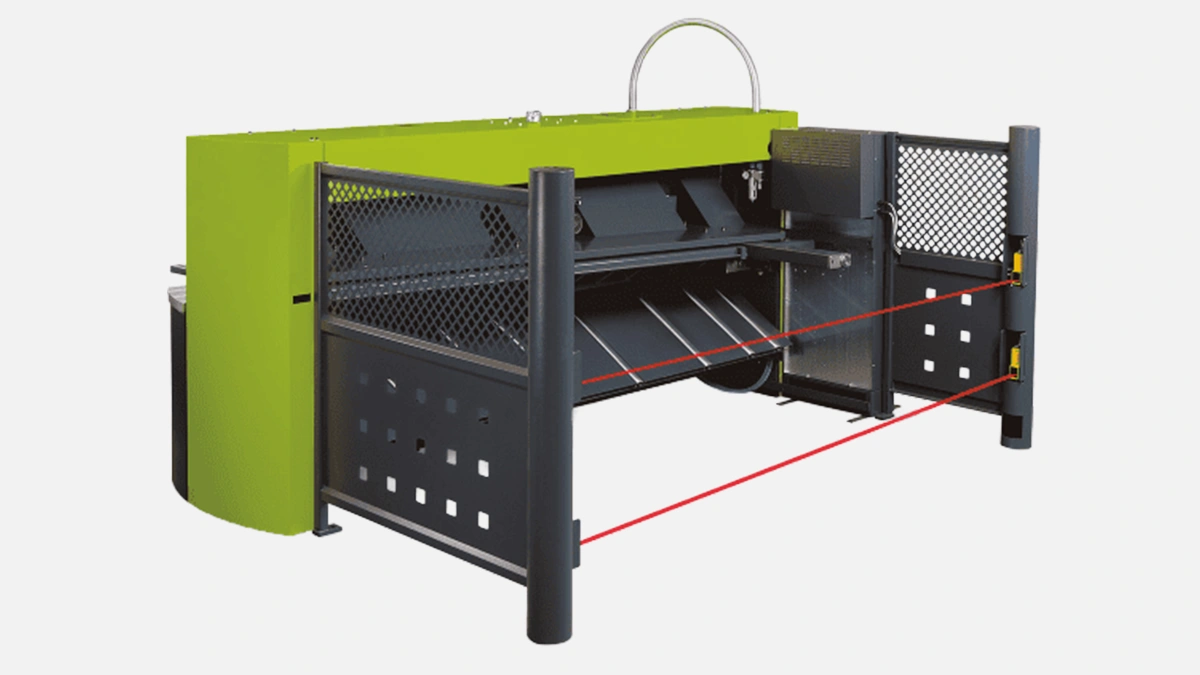
Open the front guards, look inside. Two side frames, one welded monocoque bed, top beam swinging on pivot pins. Hydraulic manifold sits low to drop the center of gravity. Strange choice at first glance, but it kills vibration. Not totally, obviously, yet you feel less chatter under 5 mm carbon steel than on comparable Turkish swing beams. I measured 0.08 mm burr height on S235 sheet, which is totally fine for HVAC makers.
Before diving too deep, glance at the numbers. They keep conversations grounded.
| Block | Part | Note |
|---|---|---|
| Frame | Welded steel | Stress relieved after fabrication |
| Drive | Hydraulics plus proportional valve | No accumulator, so softer start |
| Backgauge | Servo ball-screw | 750 mm/s rapid |
| Control | Safan EC10 | 10.4 inch touchscreen |
| Safety | Light curtain + foot switch | PL d category |
The table never tells the smell of fresh hydraulic oil, but at least we park the specs in one tidy spot. Notice the absence of an accumulator. Operators in Sharjah say that makes the ram feel civilised, because pressure builds smoother and the whole building stops shaking.
Now, two more lines so the section does not end with a table. Honestly that no-accumulator choice also lowers peak load on the power grid, which matters in older industrial zones where transformers scream during summer.
Tiny bit of theory, trust me it helps. When the beam swings, the blade follows an arc. The closer the pivot pins are to the material, the smaller the rake you need. Smaller rake means less distortion near the drop edge. The M-Shear holds a fixed 1.5° rake, good compromise. Yes, an adjustable rake would be sweet, but then the price tag jumps and maintenance headcount grows.
Three bullet points tossed in, let us keep rolling. After hearing that thud all day the younger lads still skip ear plugs, because the sound stays below 82 dB at one meter, I checked with a cheap meter from the hardware store.
I swiped the EC10 screen, English, Arabic, Russian, pick whatever. Icons are oversized, good for oily fingers. You punch in sheet thickness, material type, wanted length, done. The clever bit hides in the backgauge macros. You can create a stack of cut programs, then press one green button and let the shear walk through them. Old-school operators used to measure every strip with callipers, now they just trust the servo.
Backgauge accuracy quoted at ±0.05 mm, real life shows ±0.08 mm on a warm floor. Keep the rails clean, blow away graphite dust, otherwise you chase numbers all evening. The gauge flips up automatically for longer plates, handy for shipyards in Ras Al Khaimah where sheets often exceed 3 m.
Hydraulic pump rated 22 kW but average draw sits nearer 11 kW because the variable displacement pump chills during idle. That translates to around 8 AED per hour at Dubai industrial tariffs. Not pocket change, yet smaller than the electric bill from a comparable guillotine shear with constant-running motor.
Competitors? Prima Power C-Shear, Ermaksan HGD, Durma SBT. Quick hit list.
M-Shear dodges those traps with automatic gap and local UAE stock of seals and electronics via regional parts hubs, so downtime risk is lower. That is what the maintenance manager in Jebel Ali free zone told me last month.
M-Shear has three siblings. M-Shear 165, 310, and 410. Numbers show cutting length in centimetres. Same frame, same hydraulics, just longer guides and stronger backgauge on the 410. If you never slice anything wider than 2.5 m, lean toward the 310, lighter footprint, easier to crane through a standard loading bay. The 165 version? Mainly for job shops making cable trays, honestly underrepresented in the Gulf.
Heat is brutal. Summer shop floor hits 48 °C. The machine comes with an oil-to-air cooler rated at 1.5 kW. Keep the radiator fins dust free or the hydraulic oil climbs above 55 °C and viscosity drops, then you notice a rougher cut. Some owners bolt on an auxiliary chiller loop fed by the central HVAC water line, cheap hack that works.
Sand. Very fine, sneaks past door seals. The backgauge ball screw hates that. Simple fix, wipe rails daily, one minute, saves you a 2 000 AED part later.
I scribble a micro-checklist because nobody loves reading pages of service manuals.
Do those three items, the machine will pay rent without drama. Skip them and she starts leaking by Christmas.
More words so the list is not last. Operators in Al Ain report they spend about 30 minutes per week on all maintenance tasks combined, which is peanuts compared to a CNC turret punch.
Fabricators sending guardrails to Graco or aluminium cladding to Dubai Marina love steady through-put. The M-Shear hits 20 strokes a minute at 1 mm sheet, translates to roughly 3 tons of material per shift if you plan cuts smart. Combine it with a simple stacking conveyor and one loader, you free a second operator. Labour costs matter in UAE despite all the talk about cheap workforce, because visas and medical insurance pile up.
A finishing note. The machine looks plain, a green rectangle with a red stripe, nothing Instagrammable. Yet people buy it because it simply cuts straight and spares nerves. End of monologue.
That is it, grab coffee, decide if your shop needs one.