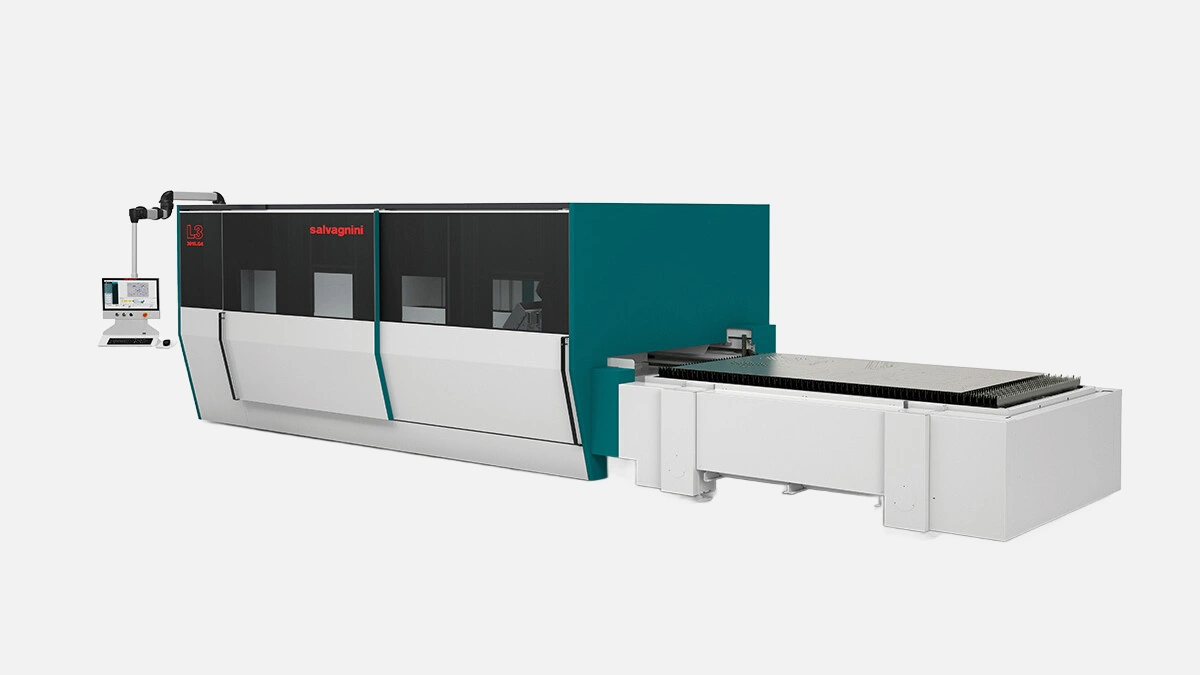
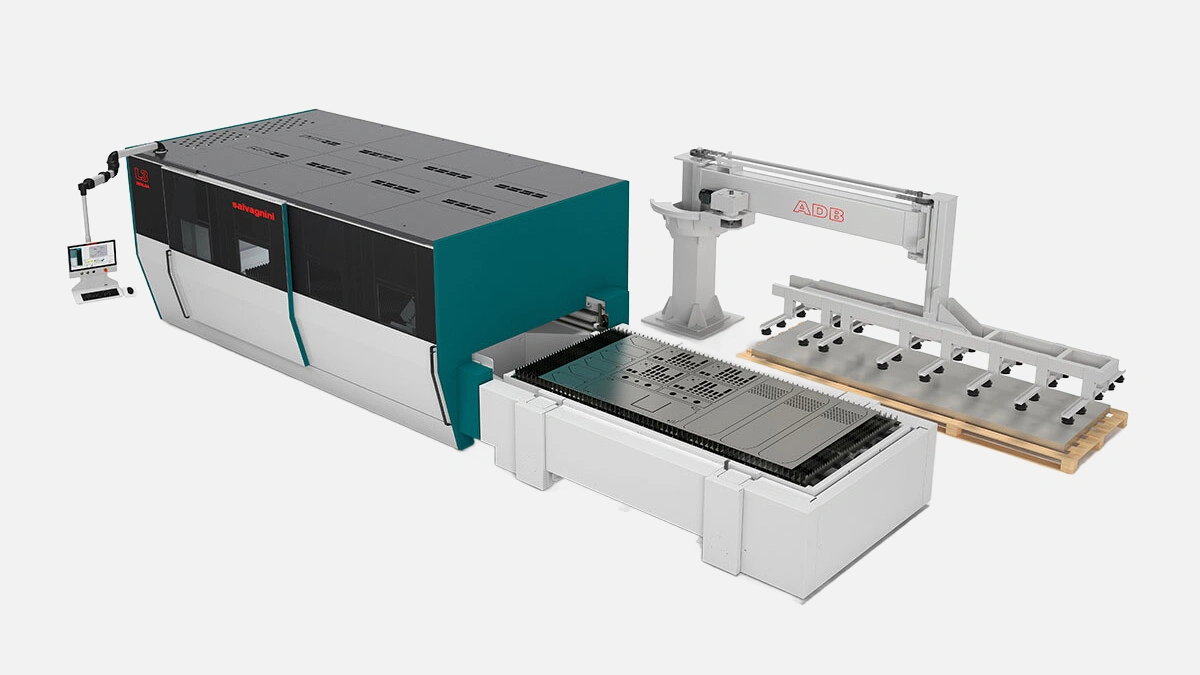
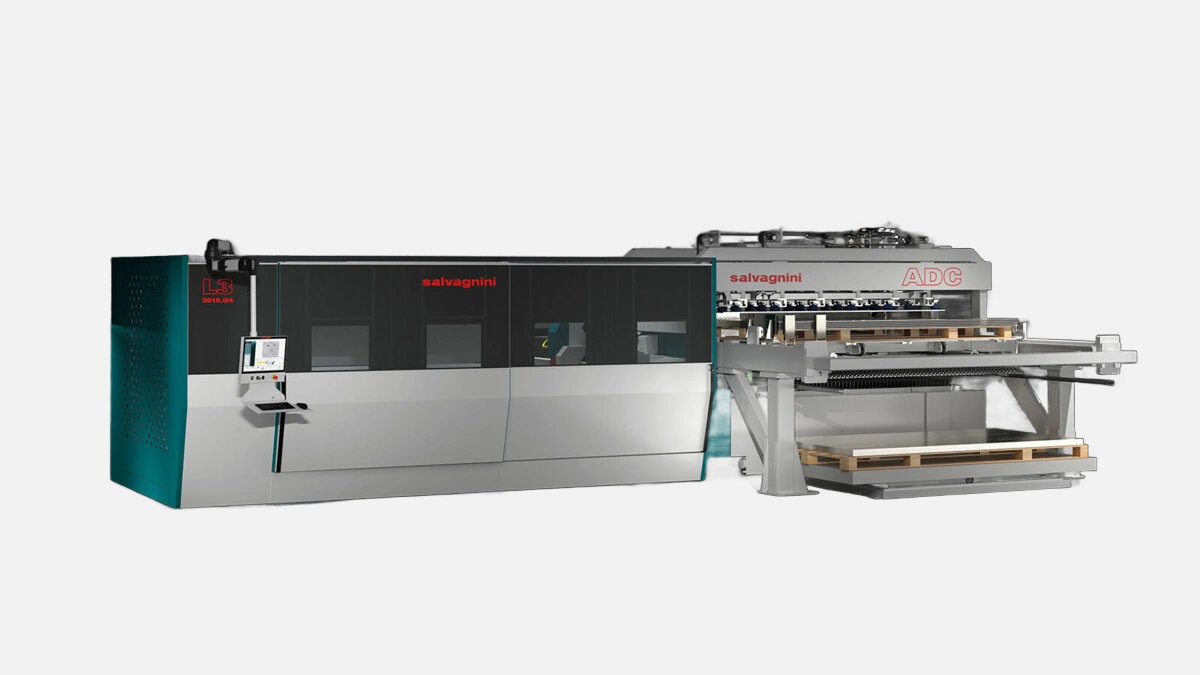
Salvagnini L3.G4 fiber laser, 3 kW, 3048×1524 mm, 140 m/min cutting for agile UAE sheet-metal shops.
Steel sheets everywhere. Quick cuts needed. Scrap piles grow.
Now picture the Salvagnini L3.G4, the fourth-gen member of the Italian maker’s flat-bed fiber family. I have seen it running in Sharjah, in a dusty but lively job shop, slicing 6-millimeter mild steel faster than the operator could clear the parts. He was grinning, no wonder.
The first sentences were short, sure. Let me stretch one. The L3 series started back in 2011, the G4 revision landed in 2021 after users kept nagging Salvagnini for a stiffer bridge, lower power draw and a friendlier HMI, so the company, which builds roughly 1 000 machines a year across all lines, tweaked the frame geometry, swapped servo packs, rebuilt the user interface on a big capacitive panel, and called it a day, well, almost.
Notice the digits, they speak louder than any fancy adjective.
Numbers on paper rarely tell how a tool feels in real life. I stood next to the gantry while it pulled 140 m per minute diagonally over a 3 000 mm plate, and it did not howl, just a low hum and a faint whistle from the linear motors. The frame did not twitch. That stability turns into edge quality, less dross, fewer post-ops.
The jump from the earlier G3 to G4 is mostly about motion. New drives push a clean 2 g, which sounds marketing-ish until you stack small nested parts. Time between cuts often beats beam-on time, so any extra g counts double.
Shaving micro-seconds, still visible on the daily dispatch board.
Two sentences first, promise. A dry table puts specs in one glance. Then we will talk OAE weather and power bills.
| Parameter | L3.G4 value | Comment |
|---|---|---|
| Working range | 3048 × 1524 mm | Full Euro sheet |
| Max power | 3 kW standard, 4 kW option | IPG YLS |
| Top speed | 140 m/min | dual linear drives |
| Acceleration | 2 g | measured at center |
| Repeatability | ±0.03 mm | ISO 230-2 |
| Assist gas ports | 3 | O2, N2, Air |
| Average power draw | 15 kW | cut mix 3 mm CS |
And back to prose. The consumption line is not a typo, several UAE shops sent me log exports, they float between 14 and 17 kW average over a 10-hour shift, chiller included.
Heat, dust, weekend rush orders, you know the drill if you run a plant in Dubai or Abu Dhabi. Cooling capacity is precious. Fiber sources waste less heat than CO2 tubes, nice, but enclosure fans still push hot air. Salvagnini slotted big washable filters behind the side panels and put differential switches that scream on the screen when airflow drops. Filter wash every 2 weeks kept the Sharjah unit under 35 °C internal even while outside peaked at 42.
Nitrogen cost also hurts here. With 3 kW on board most shops manage 10 mm stainless on shop-made N2 from PSA towers. That cuts cylinder rentals. For thin aluminum some swap to clean dry air at 6 bar, edge color stays acceptable for powder coating.
Brutal list time, no fancy wording. I picked machines that pop up in RFQs around the Gulf.
So the L3.G4 sits in the middle ground, European build, still affordable, one-piece chassis, decent cycle time.
If you see an older L3.G2 on the floor you will spot the narrower door and smaller operator screen. The jump to G3 added top speed, but the bridge remained the same. G4 got beefier rails, thicker abutments, plus the smart nozzle changer, 48 positions, automatic touch-off check, takes under 6 seconds to swap tips. Rumor says G5 is on the drawing board, probably 6 kW class, but no ETA.
Many Emirati plants run mixed Salvagnini lines, the P2 panel bender right next to the laser. L3.G4 speaks the same OPS protocol so parts flow straight into bending cells. ERP hand-off is plain CSV, nothing exotic. Operators told me they like the new Teach function, probe 3 datum points on a scrap corner, hit Confirm, program offsets update.
Yearly kit: filters, bellows, X belt tension check, head window glass pack. Under 1 200 euro and two hours downtime if your crew is not sleeping. IPG sources have hot-swap diodes, field tech in Ajman showed me one, popped out a drawer, replaced a brick in 15 min, machine restarted, nothing recalibrated.
Laser head crash is everyone’s nightmare. G4 head parks on magnetic breakaway, collision over 350 N trips it, axis stop inside 4 ms. I saw it happen when a clamp was left on the sheet, expensive spark show, but carriage survived.
The UI looks like a phone, pinch to zoom, swipe nested parts, pretty casual. New hires with gaming reflexes learn homing, dry run, and pierce height tweak in half a shift. Seasoned machinists appreciate the tech tables already loaded for Gulf common alloys, grades 304, 316L, 1050, and local HR carbon S275JR. No need to hunt PDF charts.
Salvagnini has been around since 1963, over 4 000 flat lasers shipped, the L3 line alone counts roughly 700 units worldwide. G4 iteration tightened many small bolts, literally and metaphorically. For Gulf workshops the combo of single-piece body, chilled electronics, and quick shuttle gives tangible edge in lead time, while the shared control language with Salvagnini benders trims data wrangling. No wonder sheet metal subcontractors for Expo City projects drop POs for this thing.