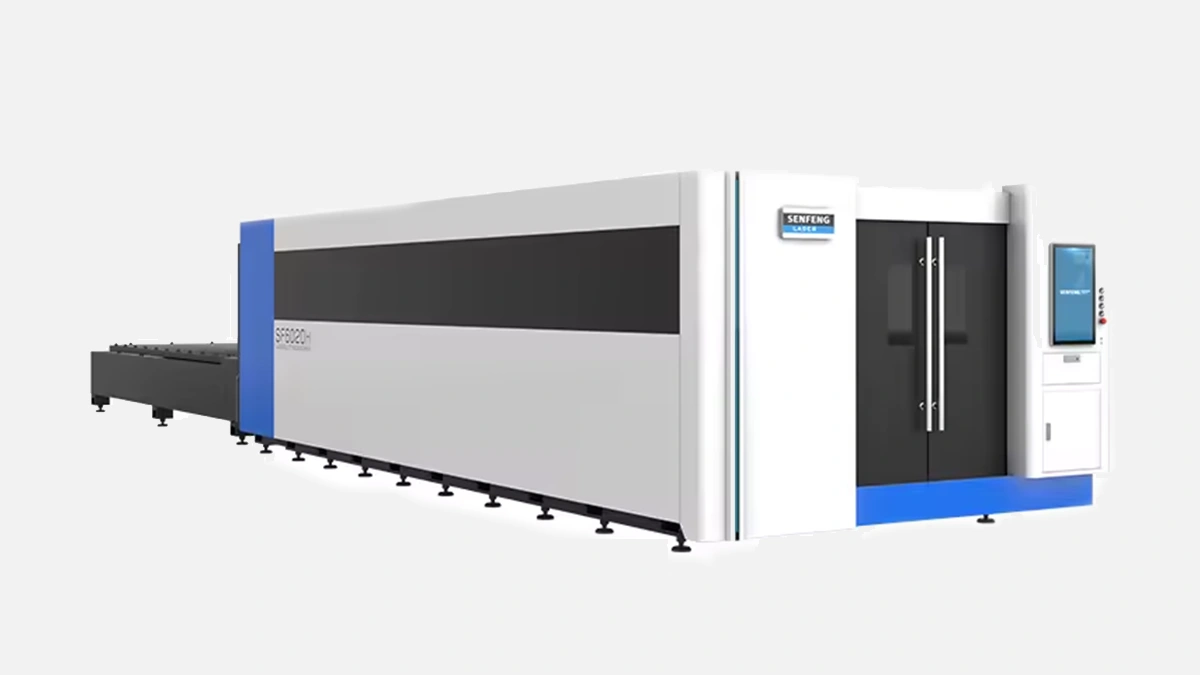
Senfeng SF6020M cuts 6×2 m sheets up to 25 mm thick, 120 m/min speed, UAE-ready chassis.
Boom. Big bed, 6 metres long. You walk around it, the gantry hums like a subway at 5 a.m. Air smells of ozone and cutting oil despite nobody using oil here, funny, mind plays tricks. Anyway, the Senfeng SF6020M sits in many UAE shops because they hate flipping sheets, fork-lifting them ten times a shift.
Metals guys in Sharjah told me bluntly, dust is their main enemy. Fine desert sand sneaks under covers, scratches linear rails, kills precision. So they wanted enclosed sides, pressurised electrical cabinet, dual-stage filters on the chiller. Senfeng added those in the 2021 revision, nobody shouts about it on brochures, but it is there, bolts still smell of thread-lock.
Below mini-table carries the numbers I managed to cross-check through manuals, public CE certificates and one overly helpful application engineer from Jinan, cheers to him.
| Item | Value |
|---|---|
| Working envelope | 6000 × 2000 mm |
| Laser source | IPG YLS or Raycus RFL, 1.5–6 kW |
| X/Y speed | 120 m/min rapid |
| Z stroke | 220 mm, motorised focus |
| Acceleration | 1.5 G peak |
| Position repeatability | ±0.015 mm |
| Controller | FSCUT 2000, firmware V3.26 |
| Gas ports | O₂, N₂, compressed air, up to 25 bar |
| Sheet table load | 900 kg |
Notice the repeatability number, it is not marketing fluff, the same value pops in their ISO-17025 calibration sheet, dated March 2023.
The table above hardly tells the whole story, so let’s poke around.
Short sentence, then long ramble. Rack and pinion on X/Y, PMI 30-mm rails, dual-driven gantry, each side independent, so skew correction is software-based, it keeps diagonal error under 0.03 mm on full stroke, decent for trucks parts, maybe overkill for simple HVAC panels. Grease fittings are reachable from front, good, because nobody crawls under a 16-ton machine twice a week in Abu Dhabi heat.
Each source sits in rear bay, coaxial cable length 10 m, protective glass D30, sensor monitors back reflection and trips within 15 µs. They finally ditched the old analog relay, now everything on EtherCAT, less wiring chaos.
Couple more words, done.
Before we jump into list, remember gas purity drives edge quality more than wattage, still, official chart says:
Nobody in UAE goes beyond these numbers daily, cheap to farm out waterjet once you hit thicker plate.
Text continues, two sentences then bullets.
Engineers told me they salvaged that idea from their tube line, good recycling of R&D hours, fine.
I stood next to an operator called Salim, he loads 6 × 2 m mild steel, 10 mm thick, hits Go, walks off to drink karak, comes back in 12 min, parts are done, small burr only on flange edges. Nitrogen tank at 23 bar, flow 260 L/min, chiller shows 28 °C because ambient was 42 °C, no alarm. Machine keeps doing that for 8-hour shift, lens clean every other day, nozzle every four hours, quick swipe with cotton swab, nothing fancy.
SF3015M, SF4020M, SF6020M, three siblings, only bed size differs, servo lineup and controller identical. Quick bullet pack, then we move on.
Why pick the bigger bed, besides obvious length matters joke, because nesting waste drops by roughly 4 % when you lay long brackets side by side instead of diagonal, numbers came from a NestingWorks study 2022.
Sentence, then table, because people ask.
| Model | Bed size | Max power | Rapid speed | Repeatability |
|---|---|---|---|---|
| Senfeng SF6020M | 6000×2000 | 6 kW | 120 m/min | ±0.015 mm |
| Bodor P6020 | 6000×2000 | 12 kW | 140 m/min | ±0.02 mm |
| HSG GH620 | 6000×2000 | 8 kW | 130 m/min | ±0.01 mm |
So yes, Bodor and HSG flash higher wattage and speed, but watch price tag, servo replacement cost and warranty terms. Senfeng gives two-year on mechanics, one year on optics, travel expenses inside UAE included, the other guys tend to bill flight tickets. That small detail decides CAPEX for plenty of factories in Ras Al Khaimah.
Now, quick geek paragraph. CypCut exports CSV containing pierce time, beam-on time, feed rate per contour, you can push it into SAP through a dirty Python script, I did, works. No OPC UA out of the box though, needs third party gateway, about 400 USD, peanuts compared to lost production logging.
Another list, because nobody reads walls.
You skip this, you pay, simple.
Normal cut cycle pulls 18–22 kW from mains, spike 35 kW when servo ramps while laser idle. Measured with Fluke 435-II at a client site, factor in your diesel backup planners.
Acoustic levels 78 dB(A) at operator station, slightly above HSG but below old CO₂ giants, conversation possible without shouting, still, buy earmuffs, they cost nothing.
One, waste conveyor exit height is only 450 mm, tricky to slide large bins. Two, software licence tied to dongle, lose it, pay 100 USD, not life changing, but annoying. That is about it, not many skeletons left.
Medium size sheet-metal contractors handling kiosks, telecom racks, mild steel frame parts. Also aluminium boatyards in Ajman like the long bed for coamings. They care about uptime, not pushing exotic alloys. SF6020M fits.
You get long bed, modest wattage range, steady support in GCC, parts inventory in Jebel Ali, operators learn interface in one day. That mix keeps job shops confident.
Some folks will still chase ten-kilowatt rockets, fair, ego matters. Yet many invoices suggest SF6020M quietly ships in decent numbers, brand claims 3 800 units worldwide, believe or not, streets echo the rumble.