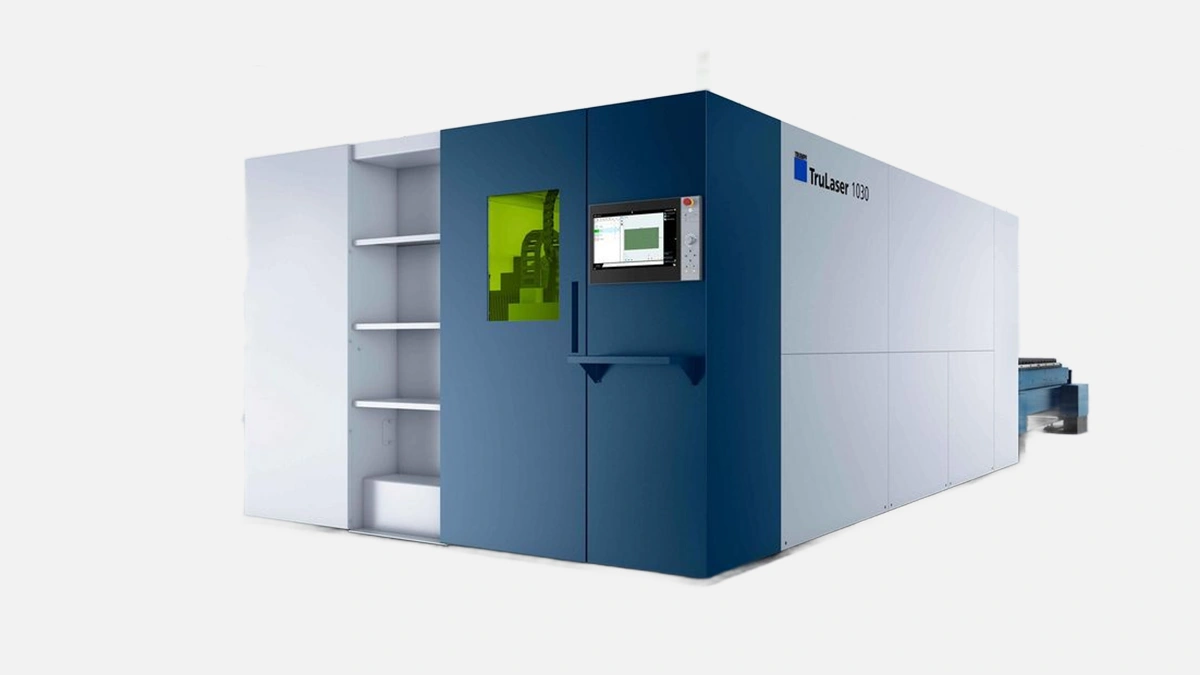
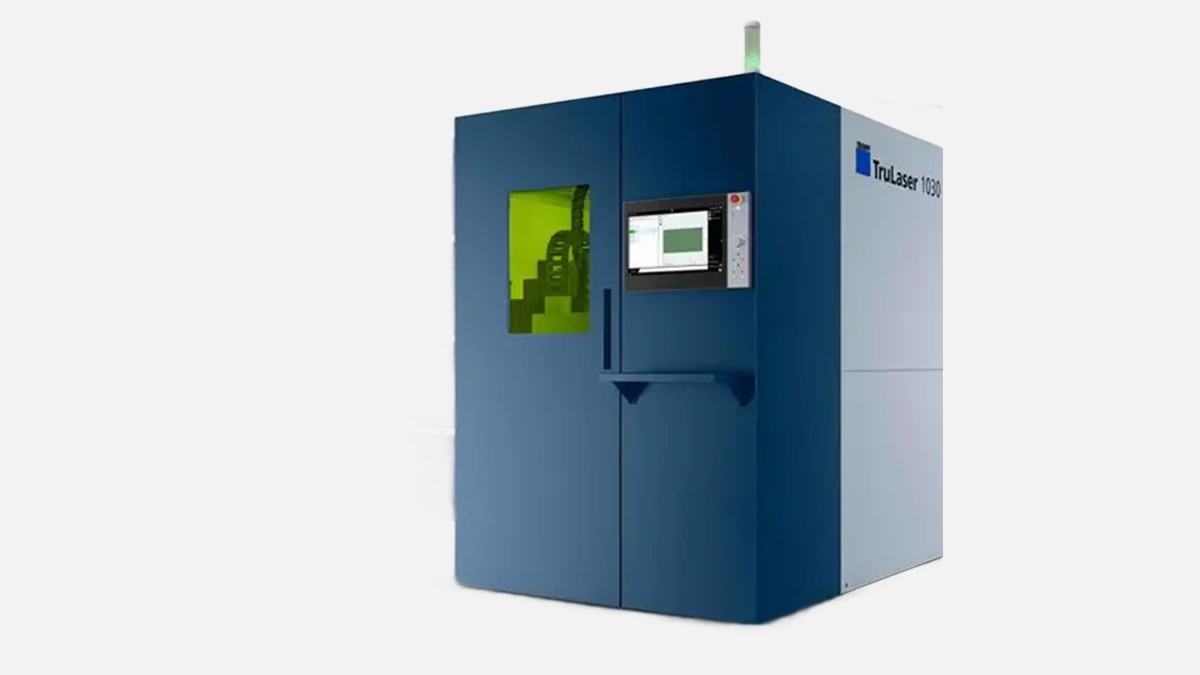
Compact 3 kW fiber laser, 3000×1500 mm bed, ≤20 mm steel, perfect for Gulf job shops.
Quick run down. 3 kW fiber engine, bed 3000 × 1500 mm. Enough to chew through daily production at a mid-size shop in Sharjah.
Then, suddenly, a longer thought sneaks in. I keep hearing shop managers complain that entry grade fiber lasers either lack speed or eat optics for breakfast, Trumpf decided to answer both groans with one shot, slapped the TruDisk resonator inside a rather compact frame, wired everything to their familiar Smart Energy cabinet, left almost no wasted footprint, and, fun twist, the service ports sit on the short side so you can push the long side tight to a wall. Space in Dubai is money, floor rent bites.
Before I pour more words, have a peek at the numbers in a neat rectangle.
| Axis | Travel mm | Rapid m/min | Drive type |
|---|---|---|---|
| X | 3000 | 140 | rack and pinion |
| Y | 1500 | 140 | rack and pinion |
| Z | 115 | 60 | ball screw |
Tables are cold, I know, but they ground the talk. Notice the Z stroke, a modest 115 mm, yet enough clearance for standard cutting heads and nozzle changers.
Heat, dust, weekend shift pressure, that is the vibe. Operators in Abu Dhabi told me straight, if a machine babysits itself and keeps the optic path sealed, they are happy. This unit does just that. Fiber path is fully enclosed, no mirrors to nudge out of alignment every time the AC hiccups.
Lower electricity appetite, roughly 35 % less than a CO₂ of equal wattage, fits DEWA tariffs.
Cuts reflective alloys, so the marine guys near Jebel Ali slice aluminum decks without flinching.
* Remote diagnostics over 4G router, the IT tech plugs a SIM, forgets about VPN drama.
Those bullet lines look isolated, but stay with me, each plugs a daily headache.
Inside the 1000 series you also meet the 1040 and 1060. Same chassis logic, bigger beds. The 1040 opens up 4000 × 2000 mm plates, the 1060 jumps to 6000 × 2000 mm. If you only handle standard 1.5 × 3 m sheets, the 1030 keeps cycle times short because the gantry travels less empty distance. So you save seconds, seconds pile into hours by month end.
I grabbed scrap notes from a workshop in Ajman. Mild steel 12 mm at 2.2 m/min with oxygen, stainless 8 mm at 2.8 m/min using nitrogen boost pack, aluminum 6 mm near 3 m/min. Numbers wobble depending on nozzle and gas purity, still they paint a clear pace.
Quick pit stop, let us stack the 1030 against three names everybody drops in meetings.
| Model | Laser power kW | Work area mm | Rapid m/min | Notable note |
|---|---|---|---|---|
| TruLaser 1030 fiber | 3 | 3000 × 1500 | 140 | sealed TruDisk source |
| Bystronic ByStar Fiber 3015 | 4 | 3000 × 1500 | 170 | wider door opening |
| Amada ENSIS 3015 AJ | 3 | 3000 × 1500 | 170 | variable beam tech |
| Mazak Optiplex Nexus 3015 | 4 | 3000 × 1500 | 120 | two pallet changer included |
You spot the speed gap, 1030 is not top of the table, yet the maintenance stories tilt the scale. Swiss and Japanese brands ask for more filter swaps in dusty environments, German filters seem to cope longer. Operators confirm, not marketing slides.
Trumpf slapped the familiar Touchpoint UI, a 19 inch capacitive panel, icons behave like any smartphone. No cryptic G codes shown on screen, only colored bars. Old school machinists whine, new school kids cheer, pick your side.
Base package ships with a manual pallet table. Most Gulf shops straight upgrade to LiftMaster Compact auto changer, otherwise night shift means jogging sheets by forklift which slows the vibe. Once the LiftMaster drops a fresh plate, cut head homes in under 15 s, hardly breaking the production rhythm.
Trumpf sits on the market since 1923, pumps out roughly 4 000 laser machines per year. Four hardware revisions of the 1030 are out, first launch happened 2013. Each rev focused on higher axis speed and better dust sealing, not flashy marketing.
Two quick bullet bundles to wrap the shop floor side.
Those chores sound boring, skipping them costs more, I learned the hard way.
Electric feed is 32 kVA steady draw when cutting 10 mm mild steel, peaks to 54 kVA on pierce. Compare to a CO₂ cousin that gulps 80 kVA continuous. That means a smaller transformer, lighter cable trays, installation budgets smile.
Stainless thickness tops at 15 mm according to data sheet, I have seen shops poke 18 mm but edge quality drops, dross forms, then the deburring wheel screams. Stick to spec, save nerves.
TruTops Boost nests parts, exports to the control over LAN. If you already run SolidWorks, there is a plug in, push one button, tool paths spit out. No dive into post processor hell.
Measured 78 dB at operator desk during continuous nitrogen cut, within UAE labour law, yet worth adding earmuffs for long shifts. Fume filter module grabs 99 % of particles above 0.3 µm.
Custom HVAC duct makers in Ras Al Khaimah, signage shops all over Dubai, job shops feeding oil and gas brackets up in Abu Dhabi. They share one demand, predictable uptime. The sealed fiber chain brings that peace of mind.
Speed good, footprint small, running cost pleasant, brand stands behind the kit. Not flawless, axis rapids could be quicker, but for regular 3 × 1.5 m sheets this machine gives balanced throughput without scaring the finance guy.
In short, that balance is why you spot the 1030 fiber parked next to Amada punch presses and old plasma rigs. It fills that sweet spot where laser quality is mandatory and budget still matters.