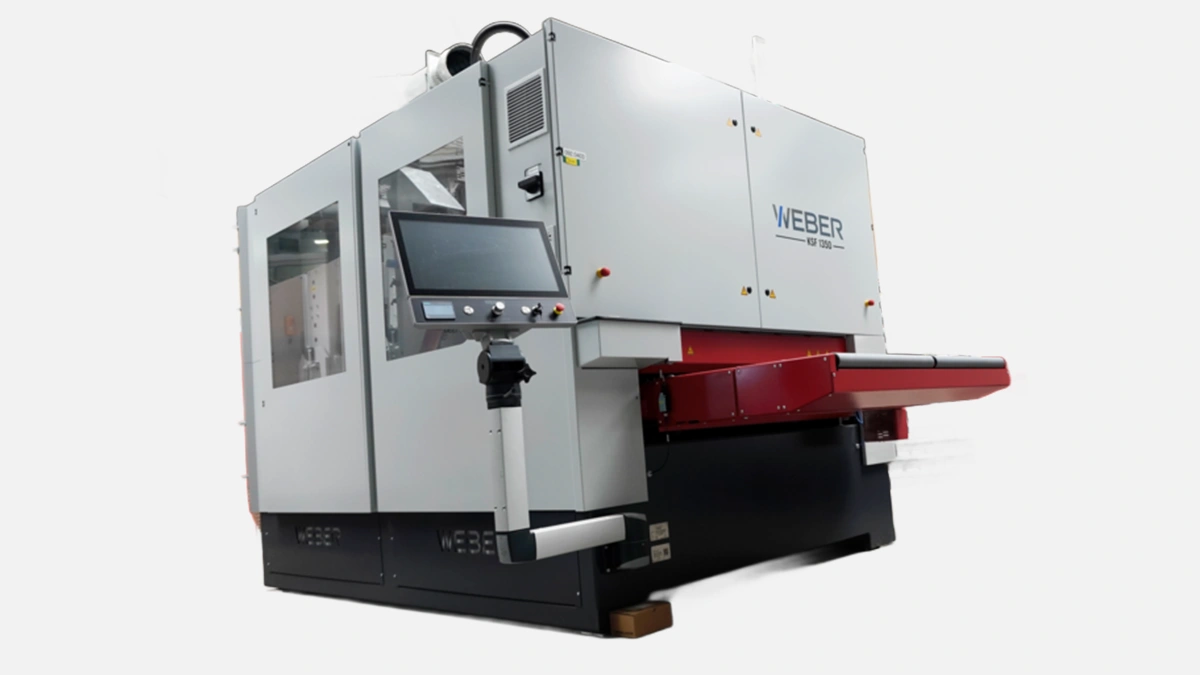
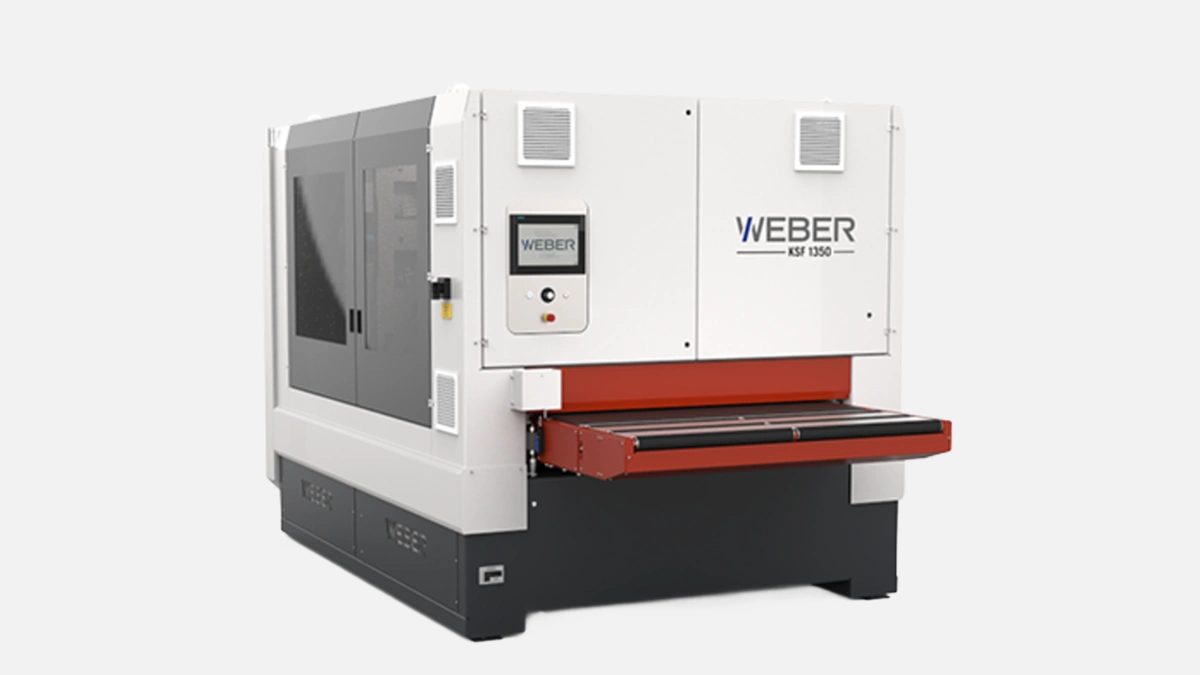
WEBER KSF sands metal sheets up to 1100 mm wide with 3–15 m/min feed, reliable for UAE workshops
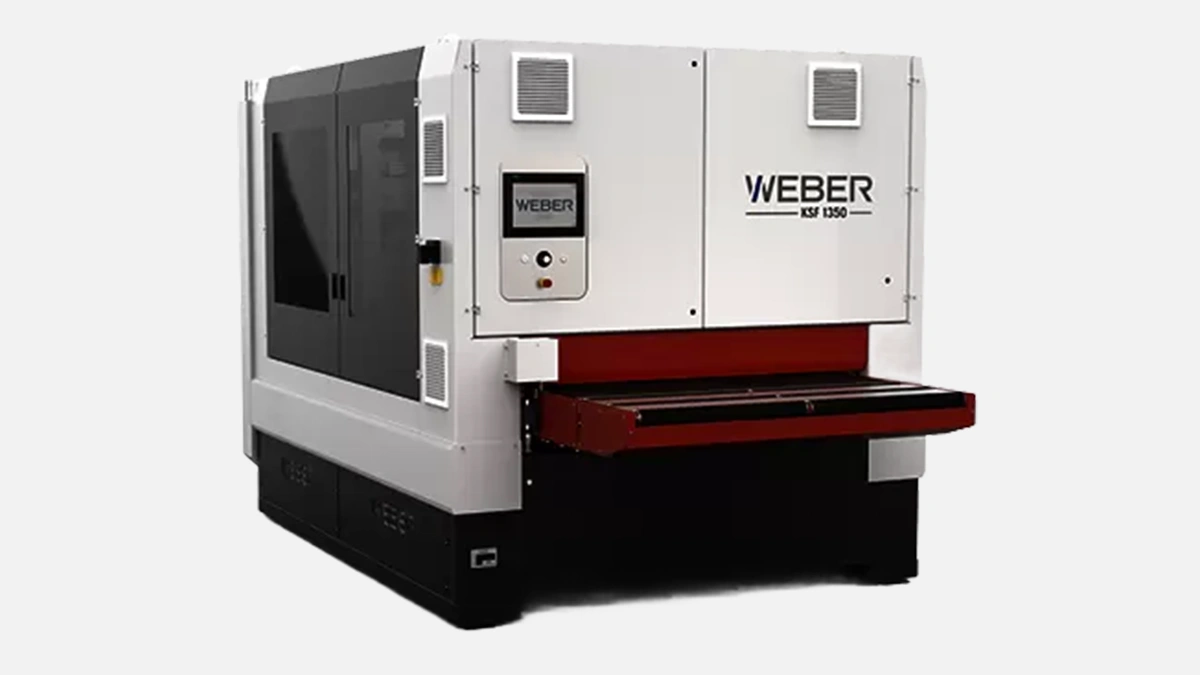
Short breath first. Metal part in, burr out, that is the vibe. The WEBER KSF sits in the middle of the shop and, yes, it looks like a chunky white fridge with attitude. Then you hit the green button, the belts start singing, the smell of fresh-ground steel fills the bay and the operator nods because the surface comes out even, matte, ready for paint or powder.
Weber is not a newcomer. The family name has been stamping machines since 1923, now run by the fourth generation, still in Bad Camberg, Germany. Rough figure, they ship about 700 sanding machines each year, seven major model lines, KSF happens to be the „jack-of-all-trades“ for metal plates. The frame of the current KSF revision is version 4, the earlier three revisions are still working out there in fabrication shops from Stuttgart to Sharjah.
Before drowning in chatter let me lock numbers on paper.
| Parameter | Value | Why it matters |
|---|---|---|
| Working width | 1100 mm | handles elevator doors, cabinet sides, sign plates |
| Max thickness | 100 mm | odd brackets or laser-cut blocks fit too |
| Min thickness | 0.6 mm | thin stainless fascia without flutter |
| Feed speed | 3-15 m/min | slow for heavy burr, fast for fine grain |
| Belt size | 2620×1130 mm | common size, no hunt for exotic abrasives |
| Main motor | 11 kW | swings a 190 mm contact drum with ease |
| Connected load | 24 kVA | lands under a standard 63 A breaker in UAE plants |
| Air draw | 400 NL/min | the shop compressor you already own is enough |
| Footprint | 2400×1900 mm | fits beside a press brake without shuffling walls |
Two sentences, promised, after the table. Those numbers are not brochure fantasy, I pulled them straight from the CE plate and cross-checked with a user manual revision 12-2022 that a maintenance tech from Abu Dhabi sent me on Telegram.
First station, a contact drum. You load a zirconia belt grit 60, the drum pushes with up to 2.2 bar, burrs fall like hot snow. Second station can be a planetary head or a cross-belt, depends on your order sheet, and this is where those radial lines disappear. The machine feeds with a caterpillar table, the vacuum under the stainless deck clamps thin sheets, preventing that ugly twist you see on old wet belt sanders.
I like the fact that the PLC does not hide behind fluffy icons. You still see raw numbers, amps, belt tension in kPa. If a drive goes over 140 percent load the feed slows without stalling. The operator in Al-Quoz told me it saved his sheet of 316L worth 450 dirham last week.
Machines earn money only when turning, so, bullet list again.
– Belt change takes roughly 40 seconds, flap the lever, pull, push new roll, slam door
– Grease nipples, once per shift, standard NLGI-2, no mystery cartridges
– Dust extraction, 2000 m³ per hour, any Nordfab duct will clip on
Notice something, the consumable math is predictable. A line of 50 sheets per hour on grit 120 eats one belt per shift in Dubai humidity, up north in Ras Al Khaimah slightly less, steel comes cooler off the laser up there.
People keep asking, why not Timesavers 42 or Costa MD5. Simple table? no, words. Timesavers is heavy, yes, but the vacuum table is optional and pricey, Costa brings Italian flair yet depends on proprietary abrasive cartridges, local supply shaky. The Weber KSF lands somewhere between – universal enough, spares arriving in 8-10 days from Germany and the belt type you find on any Klingspor shelf in Sharjah Industrial Area 17. So the downtime risk drops.
Within the Weber metal family you also meet the KSL and the MK. KSL is thinner, built for laser oxide removal only, you cannot push a 100 mm block through it. MK on the other hand is a wet grinder, good for mirror finish on aluminium but adds a pump skid that gulp 180 liters of coolant. Many shops go KSF first, add MK later when painting jobs grow.
Climate matters, sand in the air too. The KSF cabinet is sealed to IP 54. Fans blow over the inverter stack, filters pop out like A/C prefilters and you rinse them under a tap. I visited a facility near Jebel Ali where ambient was 42 °C, the machine kept the drives under 65 °C without an extra chiller, only a roof vent. Voltage range 380-415 V, matches the DEWA feed. No transformer hunt.
Quote from Faris, production engineer at a signage shop, „We moved from orbital hand sanders to the KSF, throughput jumped from 18 to 74 panels per hour and the guys stopped complaining about vibrating wrists.“ Might sound like bragging, still he sent a WhatsApp clip, time-stamped, I watched sheets zip through.
Take a laser flatbed punching 6 tons of mild steel per shift, usual dross height 0.3 mm. KSF eats that at 6 m/min on grit 80. Energy cost in Sharjah around 0.26 AED per kWh. Eleven kilowatts for the main motor plus odds gives roughly 3.2 AED per hour burn. Even if you swap belts every 500 m at 35 AED a pop, your cost per square meter stays under 0.14 AED. That is lower than one minute of manual flap disk time. Math done, moving on.
The pinch point guard flips down automatically when thickness gauge reads below 1 mm, clever. Still, I have seen operators override the guard with a screwdriver, do not. Emergency rope runs full front width, big gloved hand can grab it. CE category 3 relays, redundant, so a single fault does not cancel protection. Spark detector is optional, order it if you grind aluminium-steel mix, avoids late-night fires.
Plan for one day offload, one day alignment. The base frame sits on four adjustable feet, no grouting if the slab deviation stays under 2 mm per meter. A factory engineer from Germany or the regional service hub in Manama can train staff, two sessions of 3 hours each. After that operators run their own recipes, my last visit they renamed recipe 07 to ‘DXF-3mm-edge’ so they remember. Simple.
You feel it already, I like the KSF. Not perfect, noise at 81 dB could be lower, but under the earmuffs who cares. What matters, plates come out consistent, the belts are off-the-shelf, the control is honest. If your workshop pushes laser or plasma sheet flow above 20 tons a week and hates manual deburring, the machine pays rent fast.
Small wrap up.
– Production shops that cut stainless kitchen panels buy it for the clean hairline finish
– Heavy fab yards feed flame-cut edges and rely on the contact drum pressure
– Job shops appreciate the quick belt swap when flipping from aluminum to steel
That is it, coffee calling.