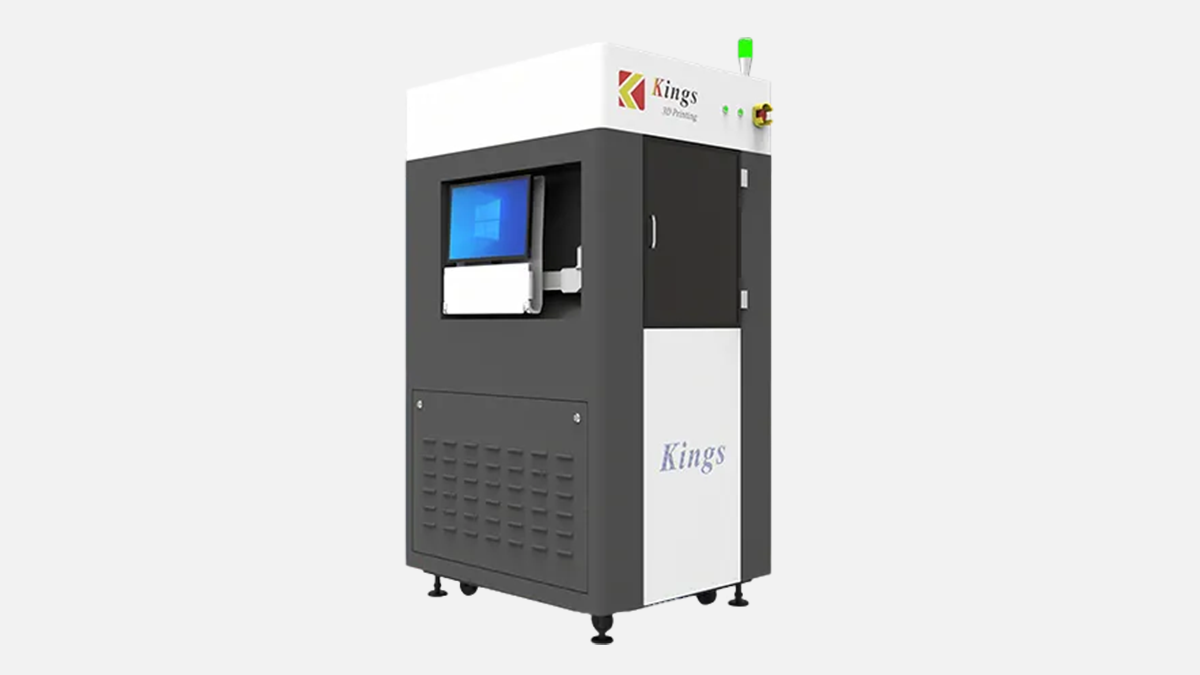
Industrial SLA resin 3D printer with 400 x 400 x 300 mm build size and 355 nm laser for accurate patterns and prototypes.
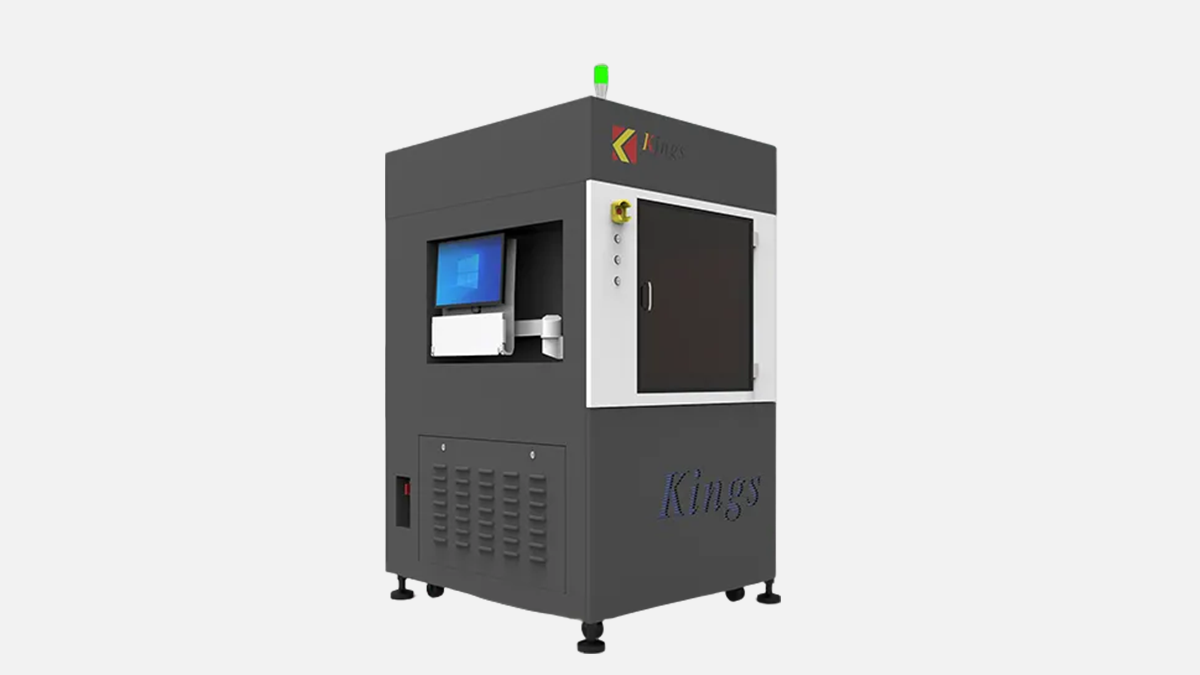
Kings SLA 400 Pro is an industrial resin stereolithography machine built around a UV laser scanning system, aimed at shops that need accurate patterns, masters, and functional prototypes without jumping to very large footprint equipment. In a metalworking environment in the UAE, it is usually not a replacement for CNC, it is a support machine that can shorten the path from CAD to a physical part for checking fit, making patterns, and preparing tooling related items.
What matters for production people is not marketing language, it is how stable the geometry is across a wide build area, how predictable the workflow is, and what the shop needs to provide in terms of room conditions and utilities. With this model, the key story is a 400 x 400 mm class build plane, a 355 nm solid state laser, and an industrial style frame and mass.
Below is a short set of parameters that are directly stated in Kings technical data for this model. If you are comparing machines, start with these numbers and only then go to secondary features like software UI and accessories. These values are what you can use for layout planning, electrical planning, and basic capability matching.
These figures already tell you a lot about how the machine behaves in real life. The mass of 650 kg points to a machine built to sit still and hold calibration rather than a light cabinet style printer. The room limits of 20 to 26 °C and humidity up to 40% tell you it expects a controlled room, which is realistic for resin work and also realistic for UAE workshops where outdoor humidity and heat can swing hard.
The practical value of a 400 x 400 mm build plane is that you can run multiple medium parts in one job, or you can print larger masters without splitting them into too many pieces. For metalworking shops, this typically shows up in pattern work for casting related tasks, master models for silicone tooling, checking complex assemblies, and building fixtures that will later be lined, sleeved, or reinforced.
The 200 mm or 300 mm Z height options are worth treating as two configurations, not a small detail. A taller Z can reduce how often you must split a tall pattern or a housing model, but it can also change how you plan supports and orientation for stable geometry on big flat areas. If your typical parts are plates, housings, and tooling faces, the Z choice is mostly about convenience. If your typical parts are tall ducts, covers, and stacked assemblies, the 300 mm configuration can matter.
Kings specifies a diode pumped solid state Nd laser at 355 nm for the SLA 400 Pro. In practice, what you care about is how well the spot size can match the feature mix on a part, and how consistent the scan is across the whole field. Kings also states a variable beam size range from 0.08 mm to 0.8 mm, which is a wide span for a single platform.
They describe the scan head as a high speed galvanometer system paired with an F-theta lens, and they state a scanning speed from 8 to 15 m/s. That speed figure is not the same as part throughput, but it is one of the indicators that the platform is designed for professional duty cycles rather than occasional prototype prints. For a buyer, the main decision is how this optical package supports two goals that often conflict: crisp detail on edges and acceptable build time on large surfaces.
Kings provides a clear accuracy statement instead of vague wording. They state ±0.08 for dimensions up to 100 mm, and ±0.1% x L for dimensions above 100 mm. For engineers, this is useful because you can estimate whether a printed master will be close enough for a given downstream process, for example silicone molding, vacuum casting, inspection jig work, or as a test fit before CNC machining.
Accuracy statements are always conditional on setup, resin, and post processing, but the way Kings writes it matches the style used by other industrial resin platforms. If your shop is used to CNC numbers, do not treat resin parts as ready to bolt into a metal assembly without verification. Treat them as accurate enough to confirm geometry, build patterns, and validate tooling concepts, then decide where you need machining allowances or inserts.
Kings highlights a marble based structure for key reference surfaces. In their brochure wording, they say the guide rail working surface flatness can reach 0.006 mm. They also state that the Z plane reference and optical path fixed plate use marble structures. The reason this matters is not the material itself, it is the intent: reduce drift and keep a stable reference for scanning and motion.
They also describe the machine as more compact in height, stating a height reduction of 30 cm compared to similar equipment. For UAE workshops where floor area and AC volume are real cost drivers, a lower cabinet can be easier to place in a controlled room while still leaving space for resin handling and post processing stations. The machine dimensions of 85 cm by 105 cm by 190 cm give you a realistic footprint to plan around, especially when you add clearance for access panels, resin tank handling, and service.
Kings specifies power input 200 to 240 V at 50 or 60 Hz and 10 A, with rated power consumption 1.2 kVA. In the UAE, the mains standard is typically 230 V at 50 Hz, so the stated range is compatible from an electrical point of view. Still, in an industrial environment you want a clean circuit and stable grounding, because resin systems do not like electrical noise in control electronics.
The more serious constraint is the room envelope stated as 20 to 26 °C with relative humidity up to 40%. That is a controlled room requirement, not a shop floor corner next to a bay door. If you already run CMM inspection or metrology in a controlled room, treat the resin printer like the same class of equipment. Also note that Kings lists hot air heating as optional, which suggests they are thinking about temperature stability of the resin and the build chamber.
Kings states the equipment control software is Kings SLA control software, and the operating system is Windows 10. They also state STL and SLC as input data formats. For most engineering teams, STL is the daily format, while SLC can be relevant in some slicing workflows because it stores contours per layer.
A practical benefit of STL and Windows 10 compatibility is that you can keep the workflow close to what your CAD and CAM engineers already use. You can prepare geometry in CAD, export to STL with a controlled tessellation, and keep revision control the same way you do for CNC fixtures. The key is to treat print preparation as a controlled process, not as an operator guessing orientation at the last minute.
Before a production shop accepts any resin printer into daily work, I recommend setting a simple repeatable checklist. This is where many teams either win or suffer for months, especially when multiple operators share the machine. A good starting checklist for this model looks like this.
After you implement a checklist like this, the machine becomes a predictable production tool instead of a risky experiment. It also makes it easier to train new operators, because the workflow is not based on personal habits. In UAE operations, predictable handover between shifts matters as much as raw machine capability.
Kings markets the SLA 400 Pro for areas like dental models, shoe mold manufacturing, jewelry, automotive parts, and research and education. For a metalworking business, the strongest value is typically in pattern and tooling adjacent tasks, where resin can reduce lead time for a trial piece or a mold master.
In daily practice, these are the kinds of jobs where this model fits well in a machining and fabrication environment. The key is that the printed part is either a master for another process, or a functional check part, not a final metal component.
After running these use cases for a few weeks, most shops start to define what the printer is allowed to do and what still belongs to CNC. That boundary is healthy, because it prevents people from expecting resin to behave like aluminum. When the boundary is clear, the printer becomes a real support asset for machining, welding, and tooling teams.
Kings states a scanning speed of 8 to 15 m/s and a layer thickness range of 0.05 mm to 0.2 mm. Those two numbers describe a space of possible operating modes rather than a single speed. In production terms, it means you can choose fine layers for surface and detail, or thicker layers for faster shape verification.
When you plan throughput, focus on how the machine will be scheduled. A machine with a 400 x 400 mm plane is often used to batch jobs, because setup time and resin handling are not trivial. It is usually more efficient to combine several parts into one controlled job than to run many single part jobs with frequent tank handling. That is especially true when the resin tank is heavy and the shop wants fewer interventions per shift.
The machine weight of 650 kg is a strong indicator that installation is a serious task. It is not a small printer that you push on wheels around the shop. You should plan for proper moving equipment, floor loading, and clearance for service access.
The first tank weight listed as 70 kg or 100 kg is also a real world detail, because it affects how your team will change and clean tanks. A tank in this mass range is not something you want a single operator to lift casually. From a safety point of view, plan a handling method before the machine arrives, such as a small lift, a trolley, or a two person procedure with clear roles.
For practical operation, the questions that decide daily stability are very simple. Do you have a clean resin handling area. Do you have a controlled room. Do you have trained people who can keep the process consistent. A machine like this will punish a shop that treats it like a hobby printer, and it will reward a shop that treats it like a controlled production process.
Most buyers will compare Kings SLA 400 Pro with other resin systems in the same size class. A fair comparison is not about brand prestige, it is about build envelope, light source, accuracy statement, and how the platform scales to daily production. Below is a compact table using published specifications from each manufacturer source.
| Model | Build envelope | Light source | Layer thickness | Stated accuracy |
|---|---|---|---|---|
| Kings SLA 400 Pro | 400 x 400 x 200 mm or 400 x 400 x 300 mm | DPSS Nd laser 355 nm | 0.05 to 0.2 mm | ±0.08 to 100 mm, ±0.1% x L above 100 mm |
| UnionTech Lite450 | 450 x 450 x 350 mm | solid state frequency tripled laser 355 nm | 0.05 to 0.25 mm | ±0.1 mm below 100 mm, ±0.1% x L at or above 100 mm |
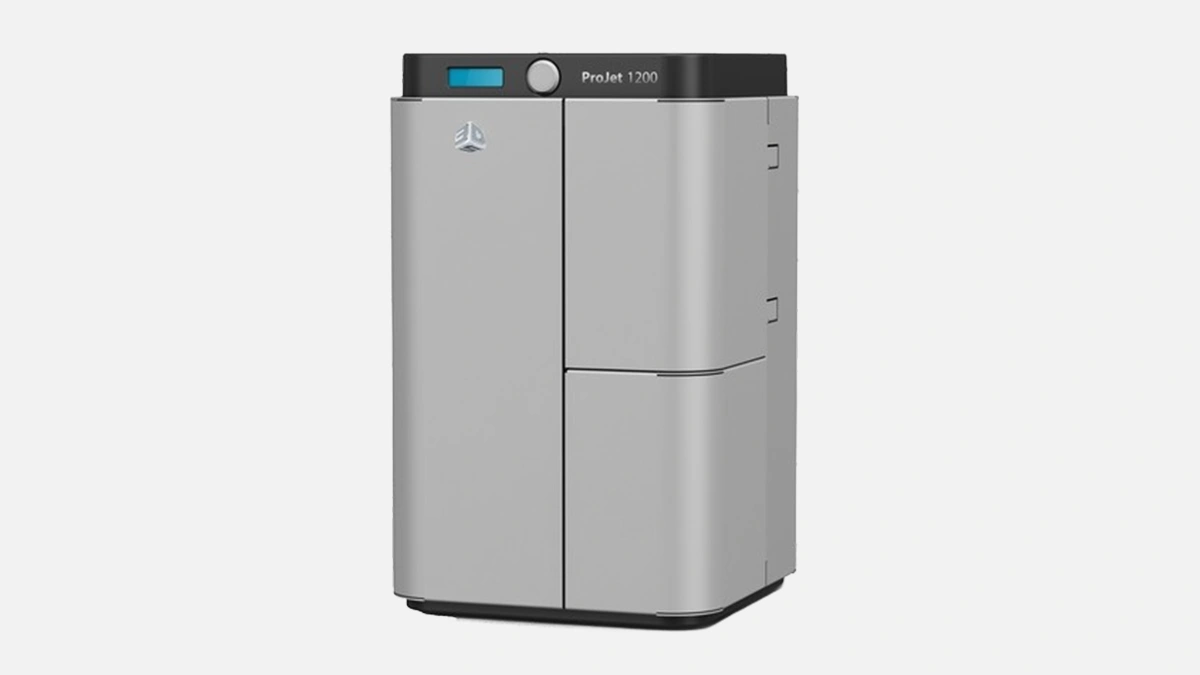
| 3D Systems ProJet 7000 HD | 380 x 380 x 250 mm | SLA system, uses two laser spot sizes per layer | not stated on the product page | not stated on the product page |
| Formlabs Form 3L | 33.5 x 20 x 30 cm | 405 nm lasers, 250 mW per laser | 25 to 300 microns | not stated on the product page |
This table should not be your final decision tool, but it highlights where Kings sits. Kings offers a 400 x 400 mm class plane with a 355 nm laser and an accuracy statement that is easy for engineers to use. Compared to a Lite450, the Kings build plane is slightly smaller, but Kings publishes a minimum beam size of 0.08 mm and highlights a marble reference structure which may be attractive if you care about stability over time.
For some buyers, brand maturity is part of risk control. Kings states it entered the 3D printing industry in 2008, and that Shenzhen Kings was established in 2015 as it moved into industrial grade equipment development. On their own timeline, Kings also states that over 5,000 printers were sold in more than 40 countries in 2023, and that shipments reached over 60 countries and regions by 2025.
Inside the Kings SLA line, their product listing shows multiple sizes, including SLA 400 Pro, SLA 450 Pro, SLA 600 Pro, SLA 650 Pro, SLA 6035 Pro, SLA 800 Pro, SLA 850 Pro, SLA 1000 Pro, SLA 1200 Pro, SLA 1450 Pro, SLA 1700 Pro, and SLA 2700 Pro. For a buyer, this matters because it suggests the 400 Pro is not a one off, it is part of a family where workflow and service approach can be similar if you later scale up.
If you are buying Kings SLA 400 Pro for a metalworking business, buy it for the right reasons. The right reasons are pattern work, assembly checks, tooling masters, and rapid iteration of geometry before machining. The wrong reason is expecting resin parts to behave like machined aluminum on day one without process discipline.
A good internal evaluation is to select a few of your real parts and run them through a trial plan. Choose one part where surface and detail matter, and choose another part where size and flatness matter. Then validate repeatability across multiple prints, because repeatability is what turns a printer into a production asset.
In my experience with UAE manufacturing teams, the companies that buy machines like this usually fall into a few clear groups. They are mold and tooling shops that need masters and patterns quickly. They are production engineering teams who want a fast physical check before committing to CNC programs. They are service bureaus and R&D units that support multiple production lines with rapid prototypes and fixtures.
The main advantages that drive those purchases are the 400 x 400 mm class build plane, the 355 nm laser optical system with variable beam size from 0.08 mm to 0.8 mm, the clear accuracy statement, and the industrial installation profile shown by the 650 kg mass and controlled room requirements. Shops that already run disciplined processes tend to get the most value, because they can integrate the printer into their existing engineering change control and quality habits.